Pixel pitch is the single most important specification on an LED video wall — it determines image clarity, minimum viewing distance, application suitability, and ultimately price. A P1.2 indoor screen and a P10 outdoor billboard look almost identical from the right viewing distance, but cost 10× different per square meter.
This guide walks through every common pixel pitch from P0.9 to P10, with 2026 price benchmarks, real-world viewing distances, and the project types each pitch is designed for. By the end, you’ll be able to specify the right pitch for your project with confidence.
The 1:1 Golden Rule
Example: A P2.5 screen is visually smooth from 2.5 meters away. A P10 screen requires at least 10 meters. Use this as your primary filter before evaluating project budget.
Minimum comfortable viewing distance (in meters) ≈ pixel pitch (in mm)
A P2.5 screen is comfortable from 2.5 meters away. A P10 screen needs at least 10 meters of distance to look smooth. Use this as your starting filter.
What Pixel Pitch Actually Means
Pixel pitch is the distance, in millimeters, from the center of one LED pixel to the center of the next. A “P2.5” display has 2.5 mm between adjacent pixel centers. Smaller numbers mean denser pixels, sharper images, and shorter usable viewing distances.
Pixel pitch directly determines pixel density. A P1.2 indoor display packs roughly 694,444 pixels per square meter; a P10 outdoor billboard has only 10,000 pixels per square meter. That density gap is why fine-pitch indoor screens cost 10–15× more per m² than coarse outdoor pitches — they require 70× more LED chips for the same surface area.
Fine Pitch (P0.9 to P1.8): Premium Indoor
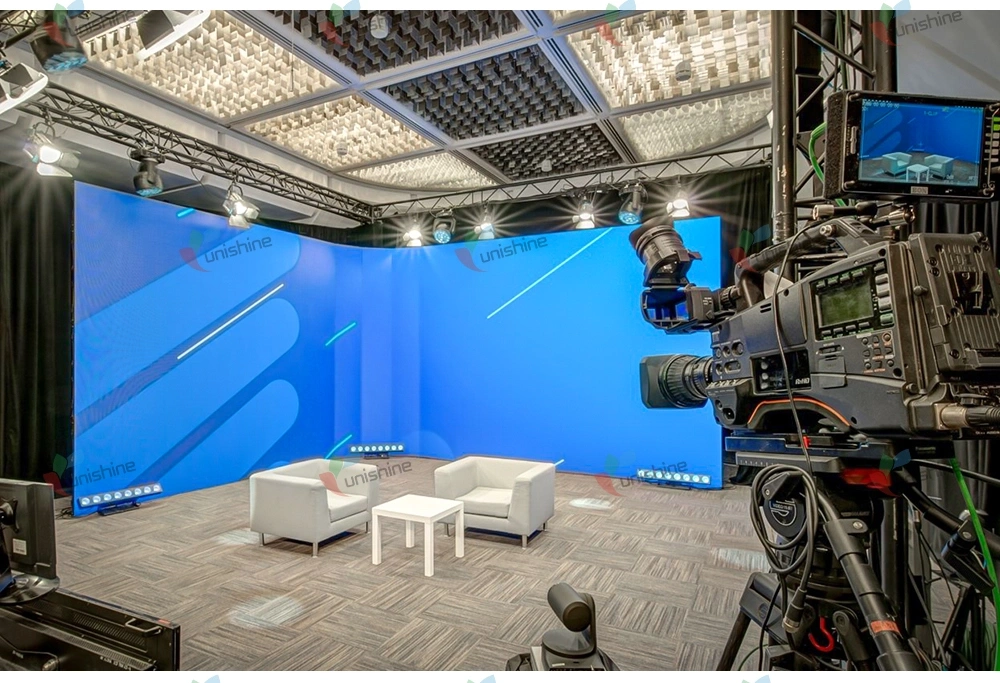
This tier is designed for environments where viewers stand or sit within 2 meters of the screen — control rooms, executive boardrooms, broadcast studios, and high-end corporate lobbies. At these distances, P2.5 and larger pitches show visible pixel structure; only P1.8 and below maintain a smooth, monitor-quality image.
B2B Strategy Note: High-end fine-pitch (P1.2–P1.5) systems often carry a heavy “Tier-1 brand premium” that can inflate budgets. By partnering directly with an Agile Manufacturer like Unishine LED, you can often bypass the 30% middleman markup. This pricing efficiency frequently allows buyers to upgrade a P1.8 budget into a superior P1.5 COB solution for the same total investment.
P0.9 (Micro LED)
The newest tier of LED display technology, comparable to high-end OLED in image quality. Common applications include premium control rooms, executive briefing centers, and ultra-high-end retail flagship displays. Most P0.9 panels use COB packaging due to manufacturing requirements at this density.
- Comfortable viewing distance: 0.9–1.5 meters
- Pixel density: ~1.23 million pixels per m²
- 2026 price range: $4,000–$8,000 per m²
- Typical lead time: 30–45 days (limited factory capacity)
P1.2 (COB Standard)
The current sweet spot for premium indoor applications. P1.2 provides excellent image quality at viewing distances where most professional environments operate. COB packaging is standard at this pitch — SMD versions exist but show grid lines at close viewing.
- Comfortable viewing distance: 1.2–2 meters
- Pixel density: ~694,000 pixels per m²
- 2026 price range: $2,500–$4,000 per m²
- Common applications: Control rooms, broadcast studios, premium video conference systems
P1.5 to P1.8
A practical middle ground for indoor projects where P1.2 exceeds budget but P2.5 is too coarse. Available in both SMD and COB; SMD versions are noticeably cheaper but show subtle pixel structure at very close viewing.
Standard Indoor (P2 to P3): Conference and Retail
The workhorse tier for most commercial indoor LED projects. Conference rooms, retail displays, command centers, and indoor advertising screens overwhelmingly use this range. The cost-to-quality ratio is excellent for typical viewing distances of 3–5 meters.
P2.5 (Most Common Indoor)
P2.5 is by volume the single most popular indoor pixel pitch globally. The density is sufficient for image quality at typical conference room viewing distances, manufacturing maturity is excellent (low defect rates), and pricing is reasonable.
- Comfortable viewing distance: 2.5–4 meters
- Pixel density: ~160,000 pixels per m²
- 2026 price range: $1,000–$1,600 per m²
- Protection Upgrade: For high-traffic areas like retail stores or corporate lobbies, we strongly recommend GOB (Glue-on-Board) technology even for P1.9 – P2.5. It provides robust anti-collision protection and moisture resistance without the steep cost of COB, significantly reducing long-term maintenance issues caused by accidental physical contact.
The P2.5 vs P3.91 decision
For typical conference rooms with the front row at 3–5 meters, P2.5 is the right call. For event stages and exhibition backdrops where the closest audience is 6+ meters away, P3.91 saves 35%–50% with no perceptible quality difference.
P2.6 to P2.9 (Rental Indoor)
A specialized range optimized for rental and staging companies. The slightly larger pitch versus P2.5 enables lighter cabinets, faster setup, and better impact resistance — important when panels are transported and reassembled weekly.
Rental and Outdoor Mid-Range (P3.91 to P4.81)
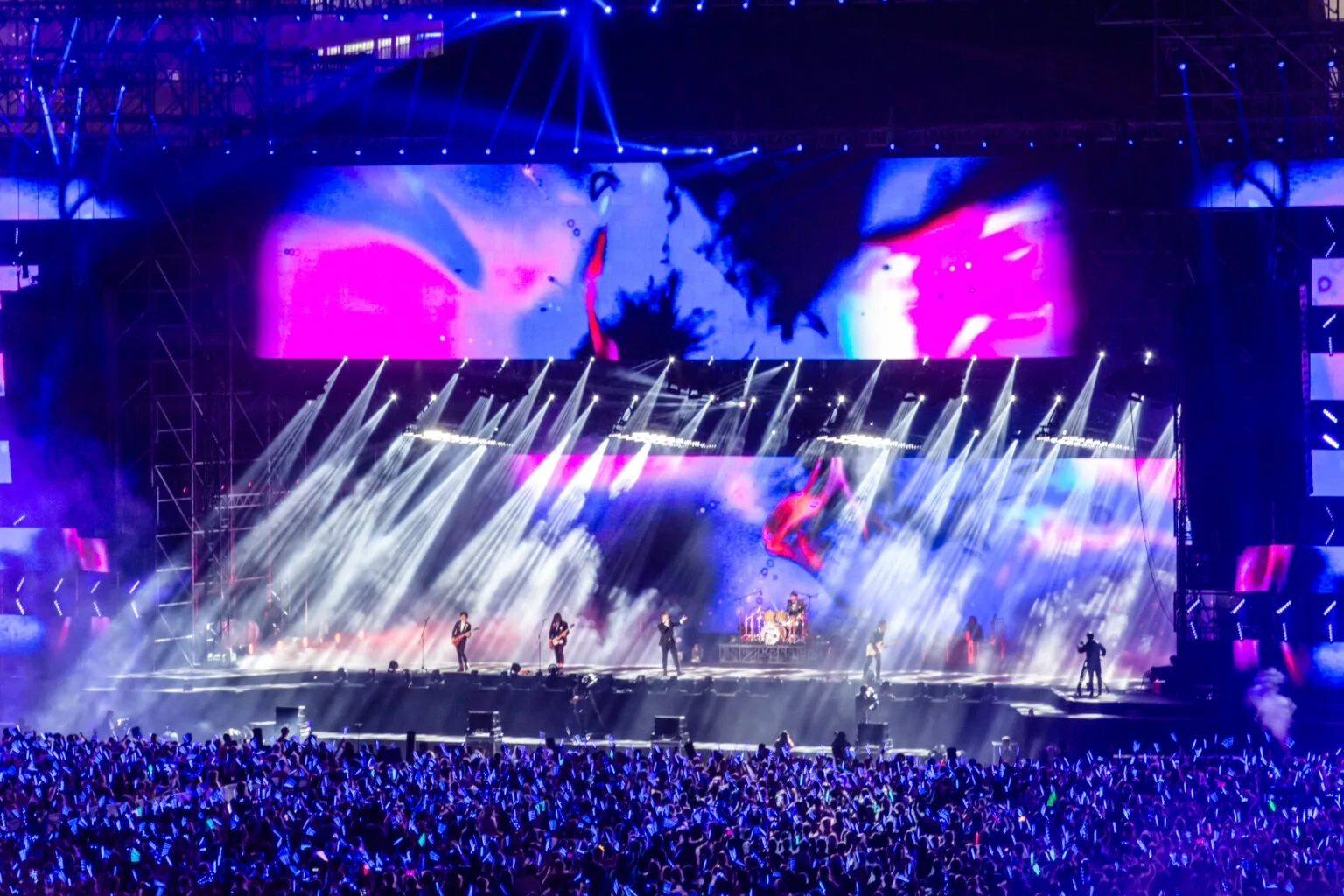
This tier dominates the rental and staging industry, plus close-range outdoor applications like premium retail facades. The pitch is fine enough for camera capture (essential for events broadcast on streaming platforms or large IMAG screens), and coarse enough to keep prices reasonable.
P3.91 (The Rental Standard)
If P2.5 is the indoor standard, P3.91 is the rental standard. Virtually every major rental display product line offers a P3.91 model, and the cabinet form factor (typically 500 × 500 mm) is compatible across most rigging systems. Refresh rates of 3840 Hz are standard, ensuring camera-friendly capture without moiré patterns.
- Comfortable viewing distance: 4–6 meters
- Pixel density: ~65,400 pixels per m²
- 2026 price range: $700–$1,100 per m²
- Common applications: Concert stages, exhibition booths, weddings, corporate events, premium outdoor signage
P4.81
A common alternative to P3.91 for outdoor festivals, large events, and budget-conscious rental fleets. Same cabinet sizes are available, and the cost saving versus P3.91 is meaningful at scale.
- Comfortable viewing distance: 5–7 meters
- 2026 price range: $550–$850 per m²
Outdoor Wide-Pitch (P5 to P10): DOOH and Billboards
The outdoor advertising tier. Pixels are too coarse for indoor or close-range use, but at typical highway and large-format outdoor distances of 10+ meters, the image looks completely smooth to the human eye. Cost per m² drops dramatically, making large-format outdoor projects economically viable.
P5 to P6 (Standard Outdoor Advertising)
The most common pixel pitch range for permanent outdoor LED advertising — retail facades, transportation hubs, urban DOOH networks. Designed for viewing distances of 5–8 meters and beyond.
- P5 outdoor: $700–$1,100 per m²
- P6 outdoor: $550–$900 per m²
- Brightness: typically 5,500–6,500 nits
- Protection: IP65 front / IP54 rear for permanent outdoor exposure
P8 to P10 (Highway Billboards)
For very large format displays at long viewing distances — highway billboards, stadium screens, large-scale digital advertising. Pixel density is low, but at 15+ meter viewing distances, the image is perfectly smooth.
- P8 outdoor: $450–$750 per m²
- P10 outdoor: $400–$650 per m²
- Brightness: 6,500–8,000 nits for highway visibility
- Common application: Highway DOOH, large stadium ribbons, perimeter sports advertising
How to Choose the Right Pitch for Your Project
A practical 4-step approach that experienced AV system integrators use:
Step 1: Measure the Closest Viewing Distance
Identify where the closest viewer will stand or sit. For a conference room, this is typically the front-row seat. For a retail flagship, the closest pedestrian path. For an outdoor billboard, the closest road lane.
Step 2: Apply the 1× Rule
As a baseline: target a pixel pitch in mm equal to the closest viewing distance in meters. So a 4-meter closest viewing distance suggests P3.91. A 2.5-meter distance suggests P2.5. This gives a comfortable image at typical vision acuity.
Step 3: Adjust for Content Type
Adjust the baseline based on what will display:
- Detailed graphics, text, dashboards: Reduce pitch by one tier (P2.5 instead of P3.91)
- Video content, photos: Stay at the baseline pitch
- Bold graphics, simple animations: Increase pitch by one tier (save cost)
Step 4: Verify Camera Capture Requirements
If cameras will capture the screen (broadcast, events, virtual production), the refresh rate must be at least 3840 Hz to avoid moiré patterns and rolling shutter artifacts. This applies regardless of pitch — but is most often overlooked at finer pitches where the buyer assumes camera capture is automatic.
When in doubt, sample first
For projects above $50,000, ordering a single 500×500 mm sample cabinet at your shortlisted pitch is the most reliable way to confirm the choice. Most factories offer sample units at $800–$2,000 with credit applied to a full order.
How Pixel Pitch Affects Manufacturer Choice
Different LED manufacturers specialize in different pitch ranges. Some examples:
- P0.9 to P1.5 fine pitch: Manufacturers with significant COB R&D investment (Leyard, Ledman, Unilumin, AOTO)
- P2.5 indoor commercial: Most established Chinese factories (LianTronics, Unishine, Absen, Unilumin)
- P3.91 rental: Specialized rental manufacturers (INFiLED, ROE Visual) plus general factories
- P5 to P10 outdoor: Outdoor-focused manufacturers (Sansi, Yaham, Unishine, Absen)
For a comprehensive overview of which manufacturers fit which project profile, see our main guide: Top 12 LED Video Wall Manufacturers in China (2026).
Frequently Asked Questions
Can I mix different pixel pitches in the same installation?
Generally no. Mixing pitches in the same logical screen creates uneven density that’s visually distracting. However, separate displays at different pitches in the same physical space (e.g., a P1.8 video wall behind a P3 ribbon screen) is common and works well when designed properly.
Does pixel pitch affect lifespan?
Indirectly. Finer pitches (P1.2 and below) typically run at lower brightness levels and use higher-quality components — both extending lifespan. Coarse outdoor pitches operate at much higher brightness, accelerating degradation. Both can deliver 60,000+ hours of useful life, but in different ways.
Why is the difference between P2.5 and P3.91 so significant in price?
P2.5 has approximately 2.4× the pixel density of P3.91. Each additional pixel requires LED chips, driver IC channels, and PCB real estate. The cost difference reflects component count, not just manufacturing complexity.
Is COB always better than SMD at fine pitches?
For pitches P1.5 and below, COB typically delivers better visual quality and durability — but at 10–30% cost premium. For P1.8 and above, the choice is less clear: high-quality SMD competes well on image quality at lower cost. The right answer depends on viewing distance, content type, and budget.
Need Help Specifying the Right Pixel Pitch?
Our engineering team can recommend a pitch based on your viewing distance, content type, and application. Quote turnaround is within 24 hours, with itemized pricing useful for comparison shopping.
For a broader view of the Chinese LED manufacturing landscape — including which factories specialize in fine pitch vs outdoor, with 2026 price ranges and project fit notes — see our companion article: Top 12 LED Video Wall Manufacturers in China (2026).