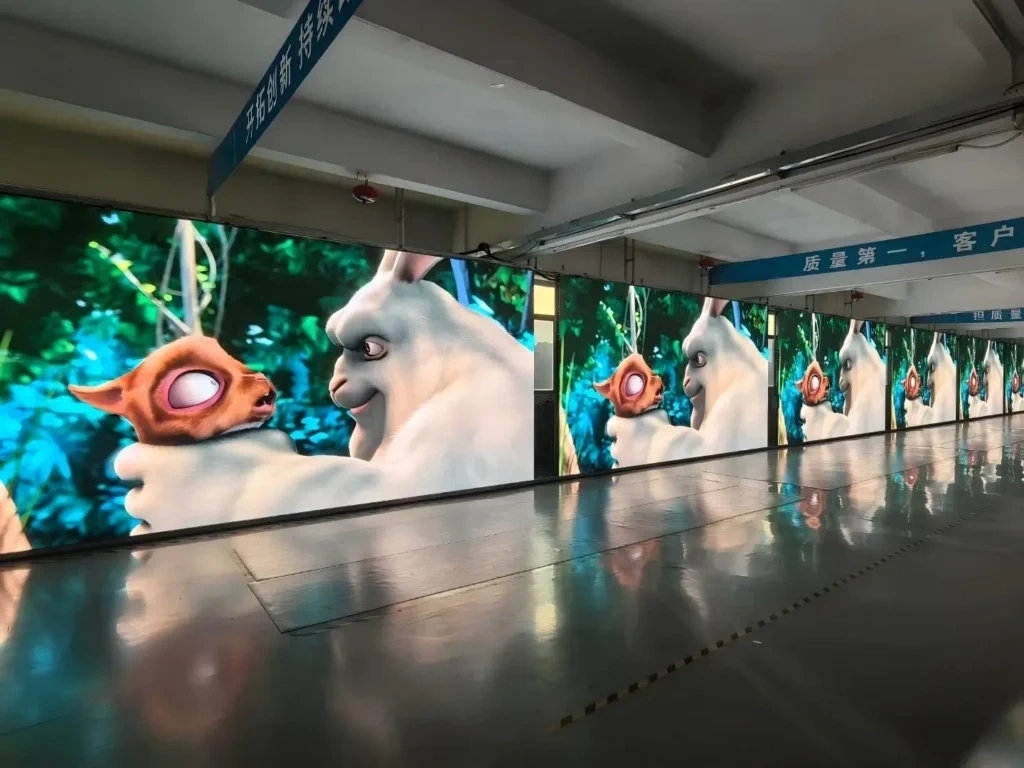
From a Single Quote to a Strategic Investment Evaluation
In the rapidly evolving landscape of visual technology, procurement professionals—ranging from American church administrators seeking projector replacements to DOOH media conglomerates—often begin their journey with a simple question: What is the current led display price? However, at Unishine LED, with over 20 years of manufacturing excellence and a 10,000m² automated production base, we encourage our partners to view this not as a purchase, but as a strategic asset allocation.
The led screen price on a preliminary quote is merely the “tip of the iceberg.” A professional-grade visual system is a complex integration of semiconductor precision, structural engineering, and software synchronization. Understanding the multi-layered pricing mechanisms is essential for global wholesalers and system integrators to ensure that their CAPEX (Capital Expenditure) translates into a sustainable, high-performance visual legacy.
Quick Project Estimate
Get a factory-direct quote and customized TCO analysis.
Hardware Core: Five Technical Dimensions Driving the Price Range
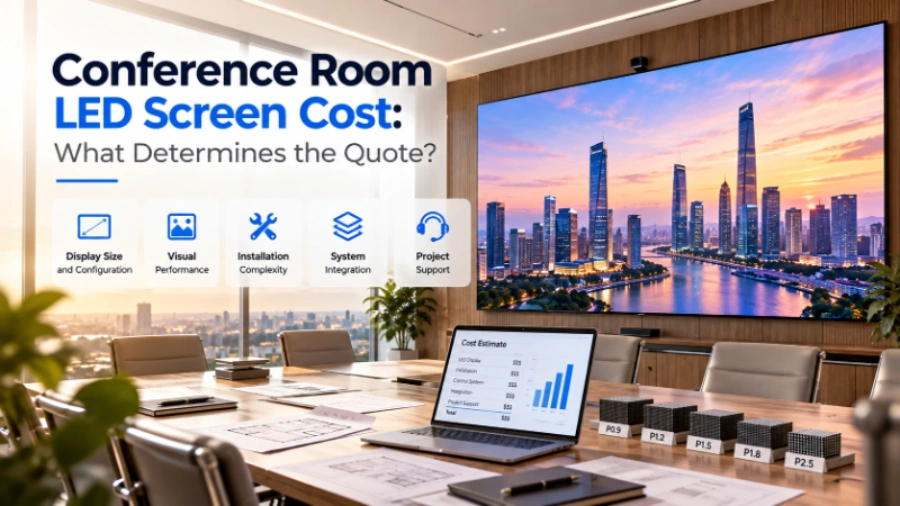
The led display screen price is influenced by five primary hardware pillars. Each variable represents a shift in both performance and manufacturing complexity.
1. Pixel Pitch (The Density Premium)
Pixel pitch—the center-to-center distance between pixels—is the most aggressive driver of the led screen display price. As the pitch moves from a standard P4.0 to a high-definition P1.2, the density of LED lamps per square meter increases exponentially. This doesn’t just increase material costs; it demands extreme precision from SMT (Surface Mount Technology) lines, as even a 0.01mm offset can result in visual seams.
2. Brightness and Environmental Shielding
There is a profound price gap between indoor models and Outdoor Fixed LED Displays. Indoor screens typically operate at 600–1,200 nits, while outdoor systems must reach 5,500–8,000+ nits to remain visible in direct sunlight. Achieving this brightness without burning out the LEDs requires high-tier gold-wire lamps and dual-voltage power designs, which naturally elevates the led screen price.
3. The Processing “Engine” (Receiving Cards & ICs)
A premium led display price often includes the industry-standard Novastar MRV532 receiving card and high-refresh-rate driving ICs. These components ensure a 7,680Hz refresh rate, which is critical for the US entertainment market where screens must appear flicker-free on 4K broadcast cameras and smartphones.
4. Cabinet Material: Die-casting Aluminum vs. Iron
For permanent outdoor installations, traditional iron cabinets are durable and cost-effective. However, for the professional AV market, die-casting aluminum cabinets are preferred. They offer superior precision, ensuring that a 50-foot video wall remains perfectly seamless—a factor that heavily influences the led backdrop screen price.
To help you navigate the complex technical landscape of modern displays, we have synthesized the core hardware variables into a strategic procurement matrix:
LED Display Pricing Decision Matrix
Packaging Revolution: Chip-on-Board (COB) vs. SMD Long-term Cost Analysis
At Unishine, we specialize in both traditional SMD (Surface Mounted Device) and the revolutionary Chip-on-Board (COB) Technology.
While many focus on the purchase price, the true value of a display is determined by its resilience; here is how Unishine’s high-protection packaging protocols translate directly into lower long-term maintenance costs (OPEX):
�� Chip-on-Board (COB) vs. SMD Financial Comparison
Hidden Budgets: Essential Expenditures Beyond the Hardware Quote
Integrators often refer to the “Iceberg Effect”—where the led screen price is visible, but the engineering costs are hidden beneath the surface.
1. Structural Load & Wind-Engineering
For massive outdoor deployments, the steel support structure is a non-negotiable cost. This includes seismic-rated framing and wind-load certifications (often required for 150mph gusts in coastal regions).
2. Signal & Power Infrastructure
Driving a professional video wall requires high-amperage power distribution and fiber-optic signal paths. For Stage & Rental LED Screens, this also includes dedicated flight cases and rigging bars, which are essential components of the led backdrop screen price.
Navigating the global market requires a strategic lens; we recommend auditing every project against this professional budget checklist to ensure your investment remains protected from hidden financial shocks:
! Global Procurement Risk & Budget Rubric
Source Manufacturing: Securing Value Through Automation
Unishine’s 10,000m² factory isn’t just a place of assembly; it’s where your ROI is secured. By eliminating middleman markups, we offer a factory-direct led display price that reinvests that 20% savings into superior components.
Consistency via Automation: Our 18+ high-speed SMT lines ensure that every module in your screen comes from the same “bin” of LED lamps, preventing the disastrous “patchwork” color effect common in low-cost screens.
Failure Prevention: Every panel undergoes 3D SPI (Solder Paste Inspection) and a 72-hour full-load burn-in. This ensures that the led screen display price you pay today doesn’t result in a technician call tomorrow.
Industry ROI Analysis: Matching Tech to Target Markets
1. Houses of Worship (The Visual Ministry)
The High-Definition Series is designed to replace aging projector systems. Despite a higher initial led screen price, it offers 100,000 hours of life with zero bulb replacements, allowing churches to conduct worship in full ambient light.
2. Professional Stage & Entertainment
The Professional Stage Rental Series features magnetic modules and one-man locking systems. For US rental companies, this reduces setup labor by 60%, significantly lowering the “per-event” operational cost.
3. DOOH & Naked-Eye 3D Marketing
Our 3D Naked-Eye Display Series creates an immersive “pop-out” effect. This premium led display price is justified by the fact that media owners can charge up to 50% more for 3D ad slots compared to standard 2D displays.
Professional Procurement FAQ
Q: Why is there such a range in the led display screen price for the same pixel pitch?
A: The difference lies in the “internals.” Lower prices often use iron-wire LEDs and standard driving ICs. Unishine’s led display price reflects the use of gold-wire lamps and high-refresh-rate components that ensure 10 years of color stability.
Q: How do you handle shipping to the US and EU?
A: We offer DDP (Delivered Duty Paid) logistics. This means the led screen price we quote includes shipping and customs duties, protecting you from fluctuating ocean freight costs.
Q: Can you support OEM projects for the High-End Slim Series?
A: Yes. Our OEM/ODM services allow for custom PCB layouts, branded software, and custom cabinet molding to fit specific architectural needs.
Price Built on Technical Reliability
The ultimate goal of procurement is not the lowest led display price, but the highest reliability per dollar spent. By partnering with a source manufacturer like Unishine LED, you gain access to factory-direct transparency and the engineering depth required for a 10-year success story.
Build Your Professional Visual Legacy
Direct factory pricing. ISO-certified quality. 20 years of manufacturing expertise. Let’s discuss your project today.
Request Your Factory Quote Now