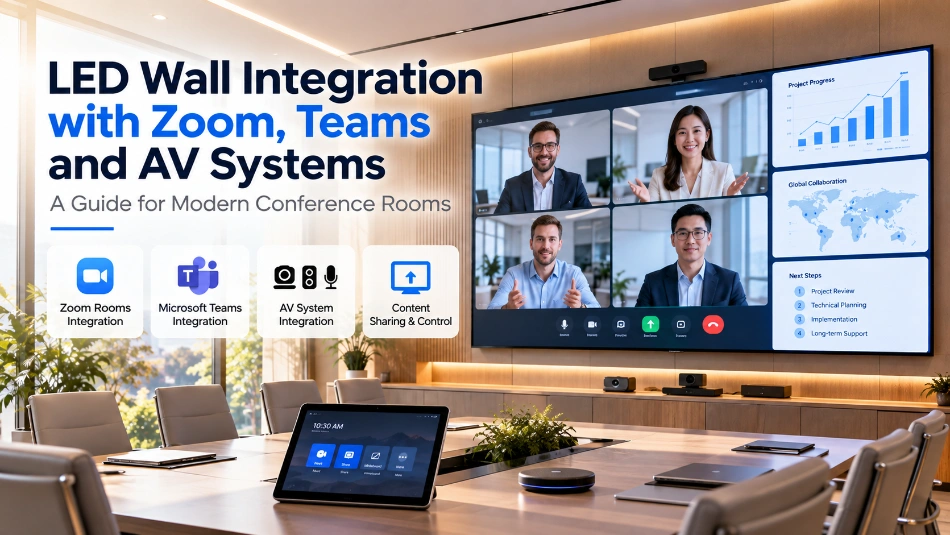
Modern conference rooms are no longer designed only for in-person presentations.
With the growth of hybrid work and global collaboration, businesses increasingly rely on meeting rooms that can connect local participants with remote teams through video conferencing platforms such as Zoom and Microsoft Teams.
In this environment, an LED wall is not simply a large display installed in a meeting room. It becomes an important visual component within a complete communication system.
A successful conference room LED wall project requires coordination between the display, video conferencing platform, content-sharing system, audio equipment, and room control technologies.
Without proper integration planning, even a high-quality display may not deliver the expected meeting experience.
This guide explains how LED walls can be integrated with Zoom, Teams, and AV systems, and what businesses should consider when planning a modern conference room environment.
Why LED Wall Integration Matters in Modern Conference Rooms
Traditional meeting rooms often treated displays as standalone devices.
A screen was mainly used to show presentations or videos. However, modern business meetings require more interaction between different technologies.
A professional conference room may need to support:
- Remote participants
- Shared presentations
- Multiple content sources
- Video collaboration
- Corporate communication workflows
The LED wall becomes the central visual platform that connects these activities.
For example, during a hybrid meeting, participants may need to view:
- Remote team members
- Presentation materials
- Shared documents
- Data dashboards
The display solution should support these different content types while maintaining a clear and professional viewing experience.
This is why LED wall planning should include integration considerations from the beginning of the project.
Understanding the Role of an LED Wall in a Video Conferencing Environment
An LED wall serves as the primary visual interface in many advanced conference rooms.
Unlike a traditional display used only for presentations, an integrated LED wall needs to support different meeting scenarios.
For example:
- During a video conference, the display may show remote participants.
- During a presentation, it may display business documents or multimedia content.
- During collaboration sessions, it may support multiple shared sources.
The LED wall should therefore be planned according to how users interact with the meeting space.
Important considerations include:
- Display position
- Viewing experience
- Content layout
- Camera placement
- System compatibility
A successful conference room design ensures that technology supports communication rather than creating additional complexity.
Integrating LED Walls with Zoom Rooms
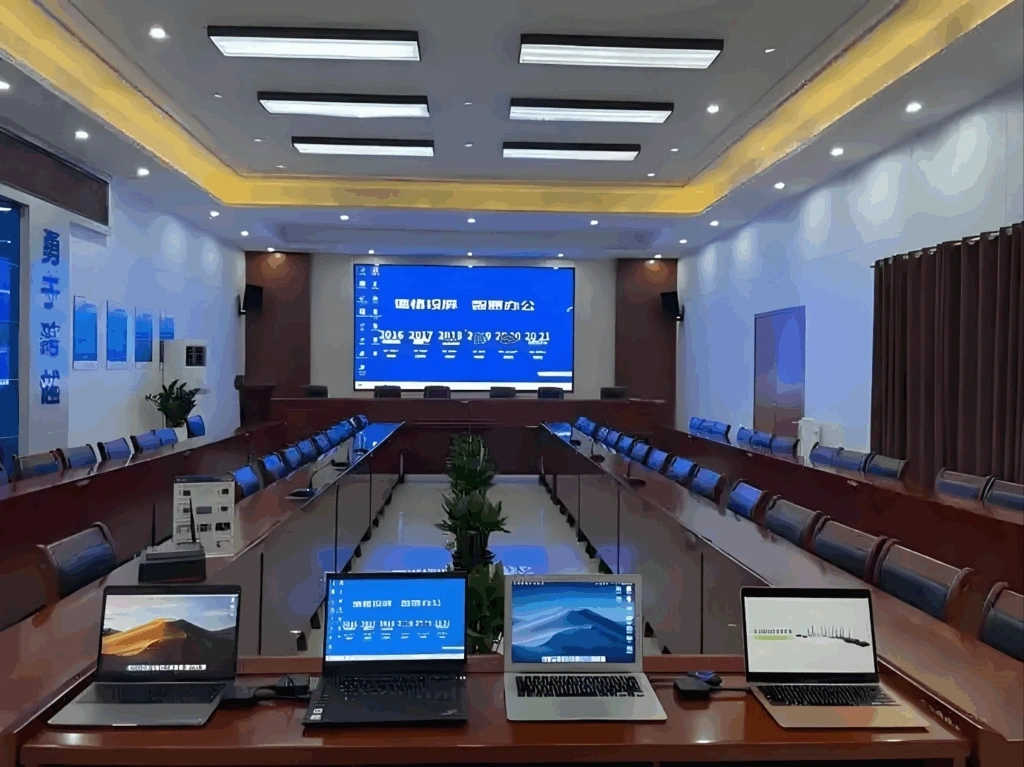
Zoom Rooms are designed to create professional video conferencing environments where hardware and software work together.
When integrating an LED wall into a Zoom Room environment, businesses should consider how the display supports the overall meeting workflow.
The LED wall may be used for:
- Displaying remote participants
- Showing shared content
- Supporting collaborative discussions
However, the display should be planned together with other room components.
For example, camera placement should allow remote participants to maintain a natural communication experience. The relationship between the camera, LED wall, and seating arrangement can influence how users experience the meeting.
A properly planned integration ensures that the LED wall enhances the Zoom Room environment rather than functioning separately from it.
Integrating LED Walls with Microsoft Teams Rooms
Microsoft Teams Rooms are widely used in enterprise environments for internal and external collaboration.
When an LED wall is integrated into a Teams Room, businesses should consider how the display supports different meeting activities.
A well-designed LED wall solution can support:
- Remote collaboration
- Presentation sharing
- Enterprise communication
The display should work together with the wider AV environment, including cameras, microphones, speakers, and control systems.
For large corporate meeting spaces, integration planning is especially important because multiple users may interact with the system every day.
A professional setup should provide a simple user experience while maintaining reliable performance.
Key Components of a Modern LED Conference Room System
A successful LED conference room project requires coordination between multiple technologies.
The LED wall is the main visual element, but it works together with other systems to create a complete meeting experience.
A modern conference room may include:
- Video conferencing platforms
- Cameras
- Microphones and speakers
- Content sharing systems
- Room control solutions
Each component needs to work together properly.
For example, a camera system should be positioned based on the LED wall location so that remote participants can experience more natural communication. Audio equipment should also be planned together with room layout to ensure effective collaboration.
The purpose of integration planning is to create a meeting environment where users can focus on communication rather than managing technology.
Camera Placement and LED Wall Design
Camera placement is one of the most important considerations when integrating an LED wall into a conference room.
The position of the camera affects how remote participants view the meeting space and interact with people in the room.
If the LED wall is installed without considering camera location, several issues may occur:
- Unnatural eye contact
- Poor participant framing
- Reduced communication quality
A well-designed conference room considers the relationship between:
- LED wall position
- Camera angle
- Seating arrangement
- Presenter location
For executive boardrooms and high-level meeting spaces, these details can significantly influence the overall user experience.
The LED wall should support communication, not create a barrier between local and remote participants.
Content Sharing and Multiple Display Sources
Modern meetings often require more than showing a single presentation.
Businesses may need to display:
- Presentation materials
- Remote participants
- Product demonstrations
- Business dashboards
- Shared documents
An integrated LED wall solution should support different content sources smoothly.
During project planning, businesses should consider how users will access and control content.
For example:
- How will presenters share information?
- How will different sources be switched?
- How will users control the display during meetings?
A professional conference room design considers these workflows before installation begins.
AV Integration Planning Considerations
When integrating an LED wall with Zoom, Teams, and AV systems, businesses should evaluate the complete room environment.
The LED wall should be planned together with:
Room Layout
The position of the display, cameras, microphones, and seating arrangement should support effective communication.
User Experience
The system should be easy for employees and guests to operate without requiring complex technical knowledge.
Future Expansion
Meeting requirements may change over time. A flexible design approach helps businesses adapt as communication needs evolve.
For corporate environments, the best conference room solutions are usually those that balance display performance with practical usability.
Common Challenges When Integrating LED Walls with Conference Room Systems
Treating the LED Wall as a Standalone Display
One common mistake is installing the LED wall without considering the complete meeting system.
A conference room display should be planned together with other technologies to ensure smooth operation.
Ignoring Content Workflow
Different organizations use meeting rooms differently.
A room designed for executive presentations may have different requirements from a collaboration space or training room.
Understanding how users share and view content helps create a more suitable solution.
Planning Integration Too Late
Integration decisions should be considered during the early planning stage.
Changes made after installation may create additional complexity.
Early coordination between the display provider, AV integrator, and project team helps improve implementation efficiency.
Why Work with an LED Display Manufacturer for Integrated Conference Room Projects?
For integrated conference room projects, selecting an experienced LED display manufacturer can help businesses coordinate display requirements with overall project goals.
A professional manufacturer can support:
- Display solution planning
- Product customization
- Technical coordination
- Project implementation
Unishine LED provides customized LED display solutions for global B2B customers, covering manufacturing, OEM/ODM customization, project solutions, and international supply capabilities.
For conference room applications, Unishine LED provides indoor LED display, fine pixel pitch LED display, and LED video wall solutions designed for professional environments including conference rooms and corporate displays.
When projects require specific configurations or integration considerations, customization capability can help businesses develop solutions based on their actual application requirements.
Unishine LED supports product customization, specification customization, and project-based LED display solutions for different customer needs.
Conference Room LED Display Solution
FAQ About LED Wall Integration with Zoom, Teams and AV Systems
Can LED walls work with Zoom Rooms?
Yes. LED walls can be integrated into Zoom Room environments when display placement, camera positioning, and meeting workflows are properly planned.
Can LED displays support Microsoft Teams Rooms?
Yes. LED displays can work with Microsoft Teams Rooms as part of a complete conference room communication system.
What systems should be integrated with a conference room LED wall?
A complete solution may include video conferencing platforms, cameras, audio systems, content sharing tools, and room control systems.
Why is AV integration important for LED wall projects?
Because the LED wall is part of the overall meeting environment. Proper integration helps ensure better communication, usability, and long-term performance.
Building a Connected Conference Room with LED Walls
A modern conference room LED wall is more than a visual display. It is a key part of a connected communication environment.
Successful projects require coordination between the LED wall, video conferencing platforms, AV systems, and room design.
By planning integration requirements early and working with an experienced LED display manufacturer, businesses can create conference rooms that support effective collaboration and future communication needs.