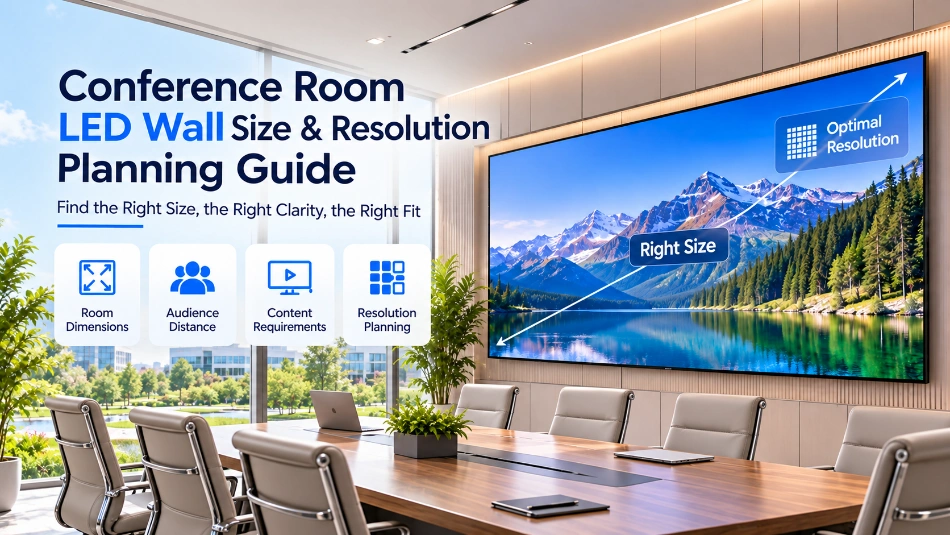
Planning a conference room LED wall requires more than choosing the largest possible display.
A professional meeting room display needs to match the room environment, audience size, viewing conditions, and the type of content being presented.
Many businesses begin the planning process with questions such as:
- How large should the LED wall be?
- What display format is suitable for the room?
- How can we ensure everyone can view content clearly?
- What information should be prepared before contacting an LED display supplier?
A conference room LED wall size and resolution planning process helps businesses evaluate these factors before selecting a final solution.
Although every project has different requirements, understanding the relationship between room dimensions, viewing distance, and display usage can help create a more effective meeting environment.
This guide explains the key considerations behind conference room LED wall sizing and display planning, helping project owners prepare for a professional LED display solution.
Why LED Wall Size Planning Matters for Conference Rooms
A conference room LED wall is not simply a replacement for a traditional display.
In modern business environments, LED walls are often used for:
- Executive presentations
- Hybrid meetings
- Video conferencing
- Data visualization
- Corporate communication
The display needs to support clear communication between presenters and participants.
Choosing an unsuitable size can affect the meeting experience.
A display that is too small may make content difficult to view for participants sitting further away. On the other hand, a display that is too large may not match the room layout or create unnecessary project complexity.
Therefore, LED wall planning should begin with understanding how the room will be used.
The objective is to create the right relationship between:
- Room dimensions
- Audience position
- Display size
- Content requirements
How to Estimate the Right LED Wall Size for a Conference Room
There is no universal LED wall size that works for every conference room.
The suitable size depends on the specific project environment.
Before selecting a display dimension, businesses should evaluate the room layout and user experience.
Important considerations include:
Room Dimensions
The physical size of the conference room provides the foundation for LED wall planning.
A small executive boardroom and a large corporate meeting space have very different display requirements.
The LED wall should fit naturally within the room without overwhelming the space.
Seating Arrangement
The position of participants affects how the display will be viewed.
For example, a boardroom with a single long table creates a different viewing environment from a classroom-style training room.
The display should provide comfortable visibility for the main audience area rather than only the people sitting closest to the screen.
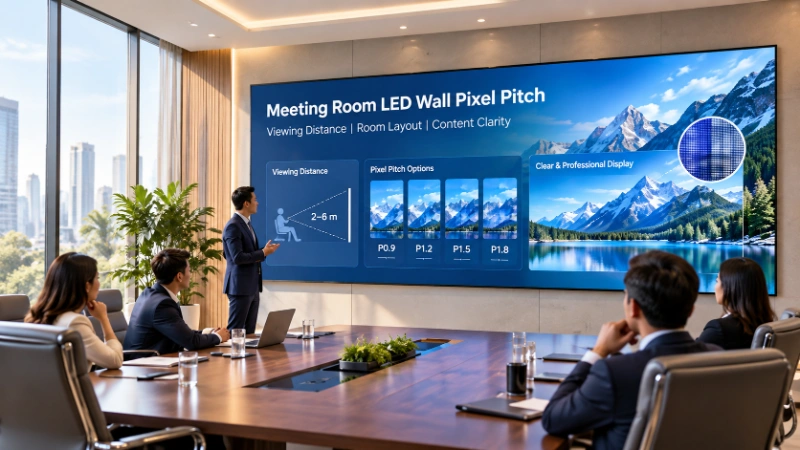
Viewing Distance
Viewing distance is one of the most important factors when planning an LED wall.
Participants located further away may require a larger visual area to comfortably view presentations and shared content.
A proper planning process considers where the furthest viewers are located, not only where the display will be installed.
Understanding the Relationship Between LED Wall Size and Resolution
LED wall size and resolution planning should work together.
A larger display does not automatically guarantee a better meeting experience. The final result depends on whether the display provides suitable visual detail for the intended usage.
For example, a boardroom used for executive presentations may have different requirements from a large meeting room used mainly for group communication.
Businesses should consider:
- Type of content displayed
- Distance between viewers and display
- Level of visual detail required
- Future meeting applications
A well-planned LED wall should support the content users need to communicate rather than simply maximize screen dimensions.
A Simple Conference Room LED Wall Planning Approach
Before requesting a professional recommendation, businesses can prepare several key project details.
The planning process usually starts with understanding:
Room Information
The room size and layout provide the basic framework for display planning.
Audience Information
The number of participants and seating arrangement help determine visibility requirements.
Usage Requirements
Different meeting activities create different display expectations.
For example:
- Presentation-focused rooms
- Hybrid collaboration spaces
- Executive boardrooms
may require different approaches.
Content Requirements
The type of information displayed also influences planning decisions.
Presentations, video content, and detailed business information may require different visual considerations.
Resolution Planning Without Over-Specifying
When planning a conference room LED wall, businesses often focus heavily on resolution. However, resolution should be considered together with room usage, viewing conditions, and content requirements.
A common mistake is assuming that the highest possible resolution is always the best choice.
In reality, the right display configuration depends on how the LED wall will be used.
For example, a meeting room mainly used for standard presentations may have different requirements from a space used for displaying detailed technical information or multiple content sources.
A practical planning approach considers:
- What type of content will be displayed
- How close participants will sit to the display
- How the room will be used in the future
The purpose of resolution planning is to create a comfortable and effective viewing experience, not simply to maximize technical specifications.
Using a Conference Room LED Wall Planning Checklist
Before contacting an LED display manufacturer, businesses can prepare essential project information to improve the accuracy of recommendations.
A basic planning checklist may include:
Room Information
Understanding the room dimensions and layout helps determine the appropriate display approach.
Display Purpose
The intended use of the LED wall affects the planning direction. A boardroom for executive presentations may require a different solution from a training room or collaboration space.
Viewing Environment
The seating position, audience size, and viewing distance influence the overall display design.
Integration Requirements
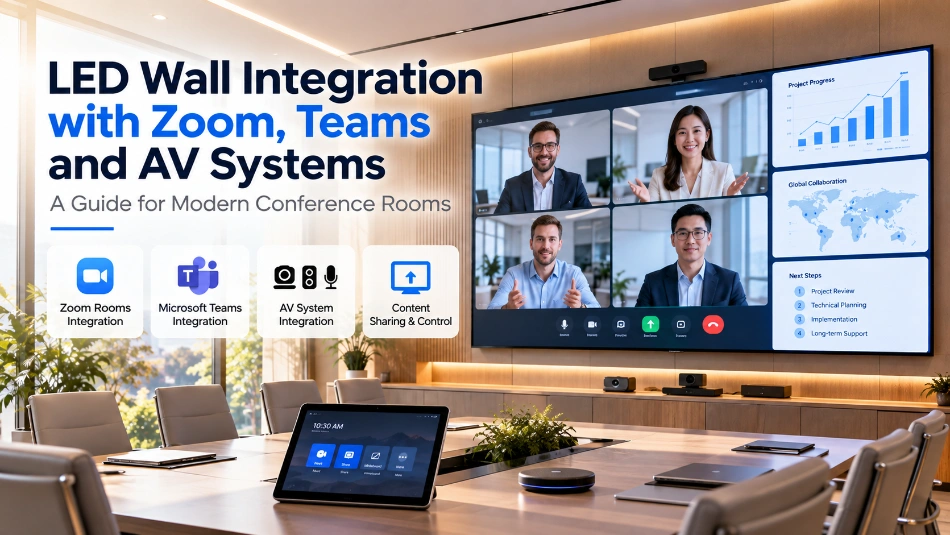
Modern meeting rooms may need the LED wall to work with video conferencing systems, content-sharing platforms, and other AV equipment.
Providing this information early helps manufacturers evaluate the project more effectively.
Common LED Wall Size Planning Mistakes
Choosing the Display Size Based Only on Wall Space
One common mistake is selecting an LED wall size simply because the wall has enough physical space.
A successful boardroom LED project requires balancing the display with the room environment.
The display should support communication without affecting the overall usability of the meeting space.
Ignoring Audience Position
A conference room is designed around people, not only equipment.
The LED wall should be planned according to where participants sit and how they interact with the content.
Considering only the installation wall location may result in a display that does not provide the expected viewing experience.
Planning the Display Without Considering Future Usage
Business meeting requirements often change over time.
A room initially used for presentations may later support:
- Hybrid meetings
- Remote collaboration
- Digital content sharing
Planning with future requirements in mind helps businesses create a more adaptable display environment.
Treating the LED Wall as a Standalone Device
A conference room LED wall is part of a larger meeting environment.
The display should work together with:
- Video conferencing systems
- Audio equipment
- Content management systems
- Room control solutions
A complete planning approach helps ensure the LED wall supports the entire meeting workflow.
How an LED Display Manufacturer Helps With Conference Room Projects
A professional conference room LED project often requires more than selecting a display product.
An experienced LED display manufacturer can support businesses with project evaluation, display configuration, customization, and technical coordination.
Unishine LED provides customized LED display solutions for global B2B customers, including manufacturing, OEM/ODM customization, project solutions, and international supply capabilities.
For conference room applications, Unishine LED provides LED display solutions including indoor LED displays, fine pixel pitch LED displays, and LED video wall solutions for professional environments such as conference rooms and corporate displays.
A manufacturer with project experience can help businesses evaluate factors such as display configuration, installation requirements, and application needs before moving into production.
Unishine LED also supports product customization, specification customization, and project-based LED display solutions for different customer requirements.
Conference Room LED Display Solution
FAQ About Conference Room LED Wall Size and Resolution Planning
How large should an LED wall be for a conference room?
The suitable LED wall size depends on room dimensions, seating arrangement, viewing distance, and meeting requirements.
How do I calculate the right LED wall size?
Businesses should consider the room layout, audience position, display purpose, and expected viewing experience before selecting a display size.
Does a larger LED wall always provide a better meeting experience?
Not necessarily. The best solution depends on whether the display size matches the room environment and user requirements.
What information should I provide before requesting an LED wall recommendation?
Providing room dimensions, usage purpose, seating layout, and integration requirements helps manufacturers provide a more suitable recommendation.
Planning the Right Conference Room LED Wall
A successful conference room LED wall project begins with proper planning.
Display size, resolution requirements, viewing conditions, and meeting workflows should be considered together to create an effective business communication environment.
By evaluating these factors before installation, businesses can select an LED display solution that matches their current needs while supporting future meeting requirements.
For organizations planning a conference room LED project, working with an experienced LED display manufacturer can help transform room requirements into a practical and customized solution.