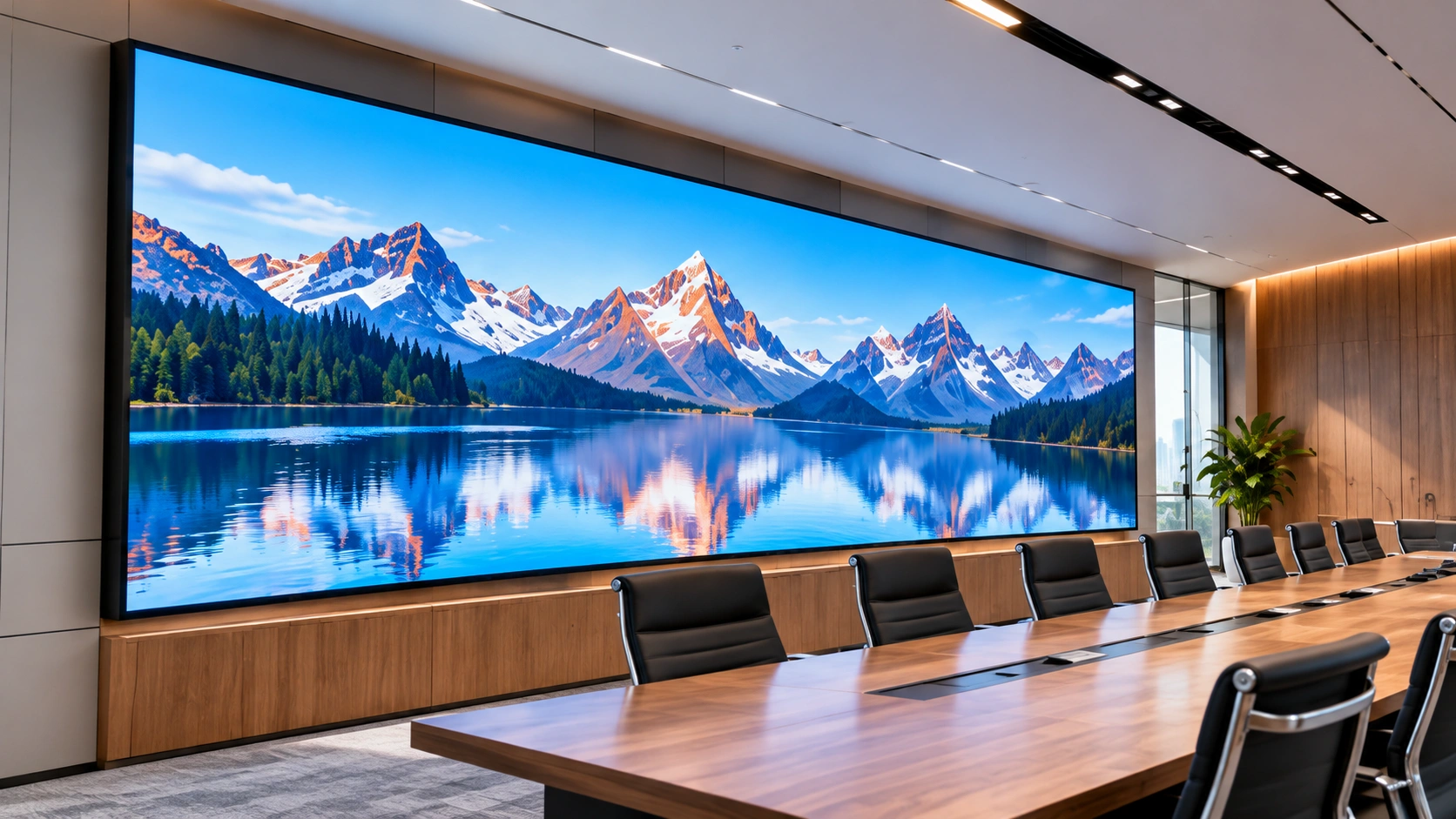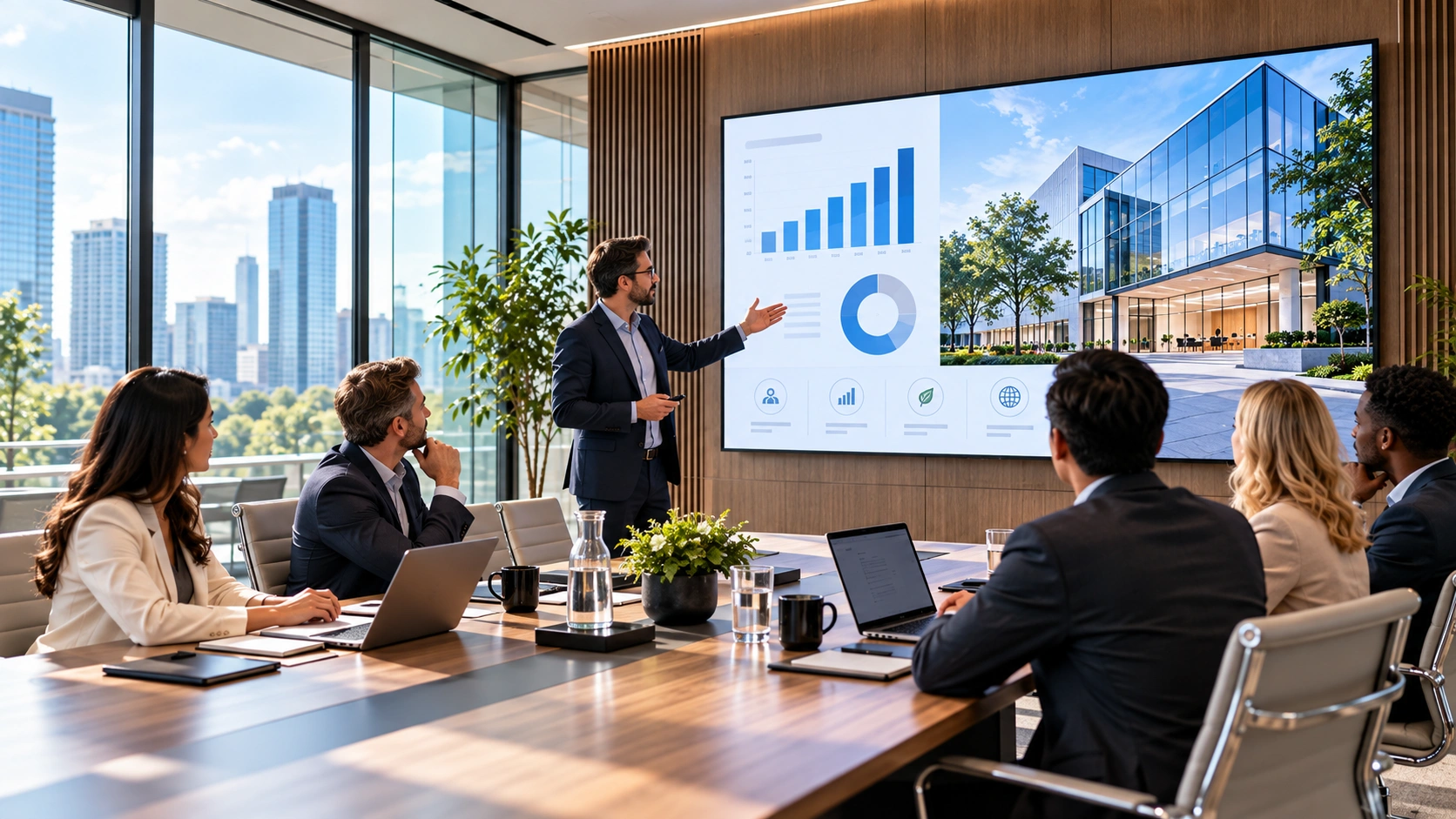
Modern boardrooms have evolved beyond traditional meeting spaces. Today, executive meeting rooms are designed to support high-level presentations, hybrid collaboration, video conferencing, and corporate communication.
As businesses upgrade their meeting environments, LED walls are becoming an increasingly considered display solution for professional boardrooms. However, installing an LED wall is not simply a matter of selecting a large screen and mounting it on a wall.
A successful boardroom LED wall project requires careful planning around several factors, including display proportion, room layout, viewing distance, content format, installation environment, and integration with meeting systems.
Among different display formats, a 16:9 LED wall is commonly considered because it matches the format widely used for business presentations, video content, and modern conferencing platforms.
This guide explains how businesses can plan a 16:9 LED wall for a boardroom, from initial space evaluation to installation considerations, helping project owners and integrators create a more effective meeting environment.
Why 16:9 Is a Common Format for Boardroom LED Walls
The 16:9 aspect ratio has become a standard format across many business communication applications.
Corporate presentations, video conferencing platforms, training content, and digital media are commonly designed around this format. Using a 16:9 LED wall allows boardrooms to display content naturally without requiring frequent adjustments or unusual screen layouts.
For executive meeting environments, maintaining a familiar content format helps create a smoother presentation experience.
A properly planned 16:9 LED wall can support:
- Executive presentations
- Video meetings
- Corporate communication content
- Data visualization
- Product demonstrations
However, the aspect ratio should not be considered separately from the room design. The final LED wall dimensions should also match the available wall space, audience position, and intended viewing experience.
A well-designed boardroom display is not only about maximizing screen size. It is about creating a balanced relationship between the display, the room, and the people using it.
Step 1: Evaluate the Boardroom Space Before Designing the LED Wall
Before selecting an LED wall size, businesses should first evaluate the physical environment where the display will be installed.
The room itself determines many important design decisions.
A boardroom LED wall plan should consider the relationship between:
- Display location
- Seating arrangement
- Audience viewing area
- Room dimensions
- Meeting activities
For example, an executive boardroom with a long conference table may require a different display approach compared with a smaller collaboration room.
The LED wall should be positioned where participants can view content comfortably without unnecessary visual strain.
The planning stage should also consider whether the display wall will become the main focus point of the room. In many executive environments, the LED wall is not only a technical device but also part of the overall room design.
Step 2: Plan the Right 16:9 LED Wall Size
Determining the correct LED wall size is one of the most important decisions in a boardroom project.
A common mistake is selecting a display size based only on available wall space. A larger display does not always create a better meeting experience.
The ideal size depends on factors such as:
- Room dimensions
- Seating distance
- Number of participants
- Type of content displayed
For smaller executive rooms, a compact LED wall may provide sufficient visibility while maintaining a clean room design.
For larger boardrooms used by more participants, a larger display area may be required to ensure everyone can clearly view presentations and shared content.
The goal is to achieve a balanced viewing experience rather than simply installing the largest possible screen.
When planning a 16:9 LED wall, businesses should consider the relationship between width and height to maintain the intended content format. This helps ensure that presentations, videos, and conferencing materials appear naturally on the display.
Step 3: Consider Viewing Distance and Display Visibility
Viewing distance plays an important role in boardroom LED wall planning.
Participants positioned close to the display will have different viewing requirements compared with those sitting further away. The display should provide comfortable viewing for the entire audience area.
Instead of selecting a display specification first and adapting the room afterward, businesses should evaluate the room layout and viewing conditions before finalizing the LED wall design.
Factors such as:
- Seating position
- Audience size
- Content type
- Meeting purpose
all influence the final display configuration.
For boardrooms, the objective is usually not maximum visual impact but clear communication. The LED wall should allow participants to read presentations, view video content, and follow discussions comfortably.
Step 4: Design the LED Wall Position and Meeting Room Layout
A boardroom LED wall should be planned as part of the entire meeting environment rather than treated as an independent display installation.
The position of the LED wall affects how participants interact with the room, how cameras capture meetings, and how presenters communicate with the audience.
During the planning stage, businesses should consider the relationship between the LED wall and other elements in the room.
For example, a video conferencing camera should have an appropriate position relative to the display so that remote participants can maintain a natural communication experience. Lighting direction should also be considered to reduce reflections and ensure the meeting environment remains comfortable.
The LED wall location should support:
- Clear visibility from all seating positions
- Effective presenter interaction
- Integration with conferencing equipment
- A professional room appearance
For modern boardrooms, the LED wall is often the central visual element of the space. Therefore, display planning should be coordinated with furniture layout, room architecture, and communication requirements.
A well-planned installation helps ensure that the LED wall supports both local participants and remote collaboration.
Step 5: Integrate the LED Wall with Modern Meeting Systems
A professional boardroom LED wall is usually part of a larger communication system.
Modern executive meeting rooms often combine displays with video conferencing platforms, collaboration tools, and content-sharing systems.
When planning an LED wall, businesses should consider how the display will work together with other meeting technologies.
For example, a boardroom may need to support:
- Remote participant video
- Presentation sharing
- Multiple content sources
- Corporate communication systems
The LED wall should provide a clear visual platform while allowing other technologies to operate effectively.
This is especially important for companies with global teams, where hybrid meetings have become a regular part of business communication.
Rather than viewing the LED wall as a standalone screen, project planners should consider it as part of the complete meeting room ecosystem.
Step 6: Consider Installation and Long-Term Maintenance Requirements
A successful LED wall project requires planning beyond the initial installation.
Before installation begins, businesses and integrators should evaluate the physical and operational requirements of the display system.
Important considerations include:
- Wall structure and installation environment
- Power requirements
- Accessibility for future service
- Long-term operation conditions
The installation method should match the boardroom design and expected usage frequency.
For example, an executive boardroom that operates every day may require a different planning approach from a presentation room used occasionally.
Maintenance access is also an important consideration. A professional installation should allow service teams to inspect and maintain the system efficiently when needed.
Unishine LED provides LED display solutions for professional applications, including indoor LED displays, fine pixel pitch LED displays, and LED video wall solutions used in environments such as conference rooms and corporate displays.
Common Mistakes When Planning a Boardroom LED Wall
Choosing the Display Size Without Considering the Room
One common mistake is focusing only on screen dimensions without evaluating the entire room environment.
A suitable LED wall size should match the seating arrangement, viewing distance, and meeting purpose.
A display that is too small may reduce visibility, while a display that is unnecessarily large may affect room balance and usability.
Ignoring Viewing Distance During Planning
Another common mistake is selecting the LED wall before considering where participants will sit.
Boardroom displays should be planned around the audience experience.
The objective is to ensure that everyone can comfortably view presentations, shared content, and video communication.
Planning the Display Without Considering Meeting Workflow
A boardroom LED wall should support how people actually use the room.
Businesses should consider:
- How presentations are delivered
- How remote meetings are conducted
- How content is shared
- How users interact with the system
A display that looks impressive but does not support daily workflows may not deliver the expected value.
Treating the LED Wall as a Standalone Product
A boardroom LED wall is part of a larger business environment.
Successful projects require coordination between:
- Display selection
- Room design
- Installation planning
- Meeting technology integration
Considering the complete system helps create a more effective and reliable meeting space.
Why Work with an Experienced LED Display Manufacturer for Boardroom Projects?
For professional boardroom projects, choosing the right display manufacturer can influence the overall project outcome.
A reliable manufacturer can support not only product supply but also technical planning, customization requirements, and project coordination.
Unishine LED provides customized LED display solutions for global B2B customers, covering manufacturing, OEM/ODM customization, project solutions, and international supply capabilities.
For boardroom applications, project requirements may vary depending on room size, display format, installation environment, and integration needs.
A manufacturer with customization capability can help businesses develop solutions based on specific project requirements rather than relying only on standard products.
Unishine LED supports product customization, specification customization, and project-based LED display solutions for distributors, system integrators, and commercial customers.
FAQ About 16:9 LED Walls for Boardrooms
What size LED wall is suitable for a boardroom?
The suitable LED wall size depends on room dimensions, seating arrangement, viewing distance, and the type of content used during meetings.
Why are 16:9 LED walls popular for boardrooms?
A 16:9 format matches many business presentation and video formats, making it suitable for corporate communication environments.
Can an LED wall support video conferencing?
Yes. With proper planning, an LED wall can be integrated with cameras, collaboration platforms, and other meeting technologies.
What should be considered before installing a boardroom LED wall?
Businesses should evaluate room layout, viewing distance, installation conditions, content requirements, and future usage needs before starting the project.
Planning a Successful Boardroom LED Wall Project
A successful 16:9 boardroom LED wall requires more than selecting a large display.
Businesses need to consider the relationship between the LED wall, room design, viewing experience, and meeting requirements.
By planning display size, layout, installation, and system integration in advance, organizations can create a professional meeting environment that supports both current and future communication needs.
Planning a boardroom LED wall project?