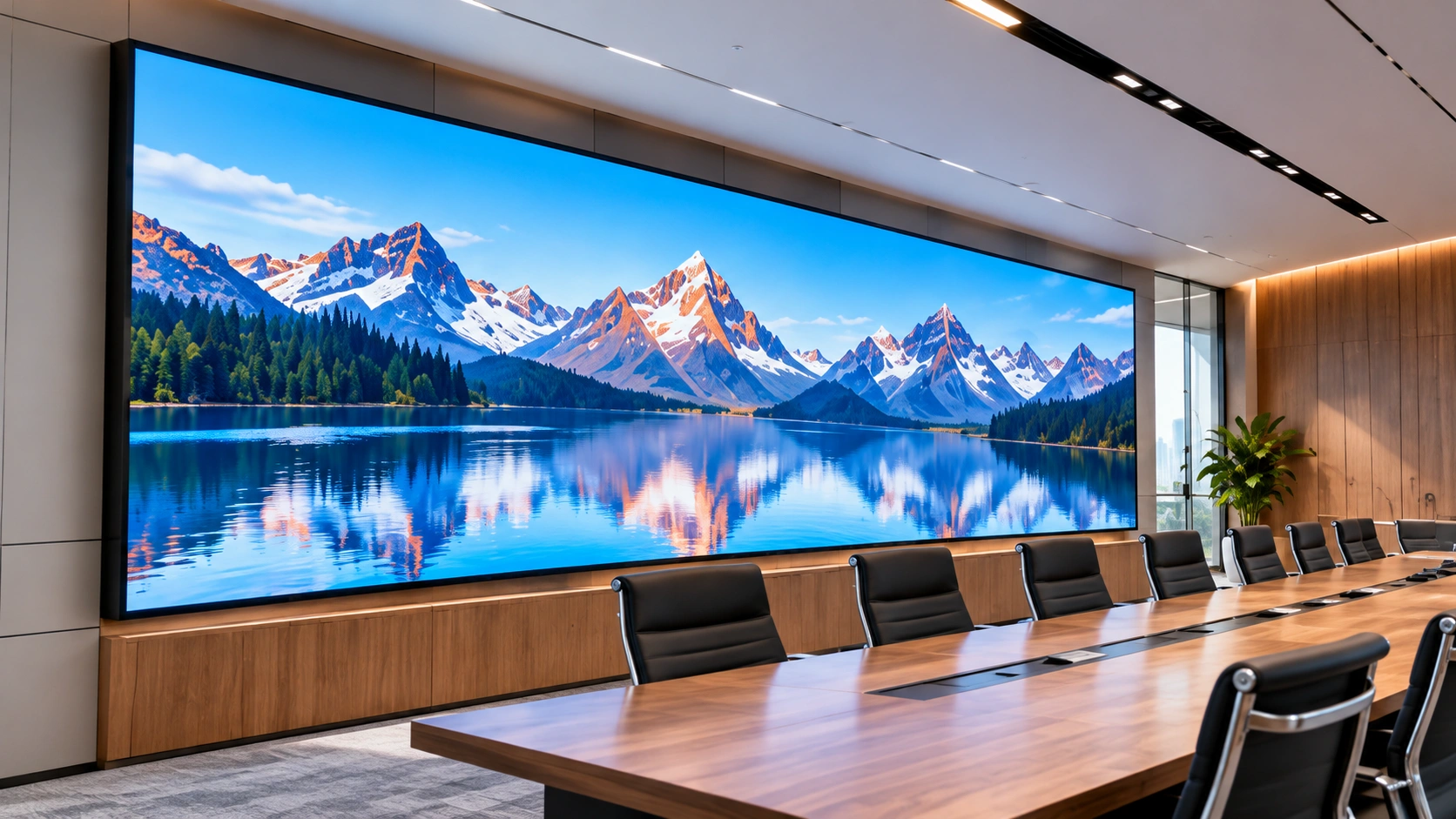

Modern conference rooms have changed significantly in recent years.
A meeting room is no longer only used for internal presentations. Businesses now rely on conference spaces for hybrid meetings, remote collaboration, customer presentations, training sessions, and executive communication.
As visual communication becomes more important, companies are reconsidering their traditional display systems.
One of the most common questions during conference room planning is:
Should a business choose a conference room LED screen or continue using a projector?
Both solutions can support professional presentations and collaboration. However, they work differently and provide different experiences depending on the room environment, meeting frequency, and business requirements.
A projector may still be suitable for certain applications, especially where occasional usage and controlled lighting are priorities. Meanwhile, a conference room LED screen can provide a more integrated display solution for businesses that require consistent image performance, frequent operation, and a modern meeting experience.
This guide explains the key differences between conference room LED screens and projectors, helping businesses evaluate which display solution matches their needs.
Why Businesses Are Reviewing Their Conference Room Display Strategy
For many years, projectors were the standard choice for conference rooms. They provided a practical way to display presentations, documents, and videos on large screens.
However, modern corporate environments have introduced new expectations.
Today’s meeting rooms often need to support:
- High-quality video conferences
- Multiple content sources
- Real-time collaboration
- Detailed visual presentations
- Remote participant communication
- Continuous daily operation
These requirements have changed how businesses evaluate display systems.
The question is no longer only:
“Can this device display an image?”
Instead, companies need to consider:
“Can this display solution provide a reliable and effective meeting experience over the long term?”
This is why more organizations are comparing direct-view LED displays with traditional projection systems.
Conference Room LED Screen vs Projector: Understanding the Main Difference
The fundamental difference between these two technologies is how they create and deliver images.
A projector displays content by projecting light onto a separate surface, such as a projection screen or wall.
A conference room LED screen creates images directly through LED modules, meaning the display itself produces light.
This difference affects several important areas:
- Visibility in different lighting conditions
- Image consistency
- Installation requirements
- Maintenance considerations
- User experience during meetings
The right choice depends on how the meeting room is used rather than simply choosing the newest technology.
1. Brightness Performance and Room Lighting Conditions
Lighting conditions are one of the most important factors when comparing LED screens and projectors.
Projector Considerations
Projectors work best in controlled environments where lighting can be adjusted.
For example:
- Meeting rooms without strong natural light
- Rooms with window blinds or lighting control
- Occasional presentation spaces
However, external light sources can affect projection quality.
A room with:
- Large windows
- Bright office lighting
- Open glass designs
may create challenges because additional light can reduce contrast and make displayed content harder to see.
LED Screen Advantages in Bright Environments
A conference room LED screen produces light directly from the display surface.
This allows it to maintain consistent visibility in environments where lighting conditions may change throughout the day.
This can be useful for:
- Executive boardrooms
- Corporate meeting rooms
- Training facilities
- Collaboration spaces
For businesses that cannot fully control room lighting, direct-view LED technology provides a reliable display option.
Unishine LED provides indoor LED display and fine pixel pitch LED display solutions designed for professional applications, including conference rooms and corporate display environments.
2. Image Consistency and Meeting Experience
Modern business meetings involve more than displaying simple slides.
Conference rooms are increasingly used for:
- Product demonstrations
- Data visualization
- Video communication
- Remote collaboration
- Multi-screen content sharing
In these situations, consistent image performance becomes important.
Projector Experience
Projection quality may vary depending on:
- Room lighting
- Projection distance
- Screen surface
- Viewing position
Participants sitting in different areas of a room may experience different levels of visibility.
LED Screen Experience
LED displays provide a direct-view experience where the image is generated from the screen itself.
This helps provide:
- Stable brightness
- Consistent viewing experience
- Large-format seamless display options
For companies creating professional meeting environments, a conference room LED screen can support clearer communication and more engaging presentations.
3. Maintenance and Long-Term Operation
When selecting a conference room display solution, businesses should consider not only installation but also daily operation.
A display system used several times per week has different requirements from one used occasionally.
Projector Maintenance Considerations
Traditional projector systems may require attention such as:
- Lamp replacement
- Filter maintenance
- Image adjustment
- Calibration
The exact maintenance needs depend on the projector model and operating conditions.
LED Display Maintenance Considerations
LED displays are designed as modular systems.
If maintenance is required, service teams can typically inspect specific components rather than replacing the entire display system.
For organizations with frequent meeting schedules, maintenance planning is an important part of selecting a long-term display solution.
4. Installation and Space Requirements
Conference room design also affects display selection.
A projector installation usually requires:
- Suitable mounting position
- Correct projection distance
- Projection screen placement
- Appropriate room layout
This means the room needs to be planned around the projection system.
An LED display provides a fixed display surface that can be integrated into the meeting room design.
Businesses can plan the display based on:
- Participant viewing requirements
- Room layout
- Content usage
- Collaboration needs
For professional conference room projects, the display solution should be considered together with the overall room design rather than as an isolated hardware purchase.
When Should Businesses Choose a Conference Room LED Screen?
A conference room LED screen is not automatically the right solution for every meeting space.
The decision should be based on how the room is used, how often it operates, and what type of communication experience the business wants to create.
The following situations are where an LED display solution is often considered.
1. When the Conference Room Is Used Frequently
Meeting rooms used every day require a display system that can provide consistent performance with minimal disruption.
Examples include:
- Corporate headquarters
- Executive meeting rooms
- Training rooms
- Collaboration spaces
- Operations centers
For these environments, the display is not just a presentation tool. It becomes part of the company’s daily communication infrastructure.
A solution that provides stable image performance and reliable operation can help improve meeting efficiency.
2. When the Room Has Uncontrolled Lighting
Many modern offices use open designs with:
- Glass walls
- Large windows
- Natural lighting
- Flexible workspace layouts
In these environments, controlling lighting conditions may not always be practical.
A conference room LED screen can maintain visibility without requiring the room to be darkened before presentations.
This creates a more natural meeting environment where participants can communicate while still viewing clear content.
3. When Businesses Need a Large, Seamless Display Experience
Some meeting environments require more than basic presentation capability.
For example:
- Executive presentations
- Corporate communication centers
- Customer demonstration rooms
- High-level collaboration spaces
In these applications, businesses may require a display that creates a professional visual experience.
LED video wall solutions can provide large-format displays while maintaining a seamless appearance.
Unishine LED provides LED video wall solutions for applications including conference rooms, corporate displays, and professional visual environments.
4. When Hybrid Meetings Are a Regular Requirement
Hybrid meetings have become an important consideration for many organizations.
A modern conference room needs to support communication between:
- People in the meeting room
- Remote employees
- External partners
- Global teams
Display quality affects how participants view:
- Presentation materials
- Video participants
- Shared documents
- Digital content
For businesses that frequently conduct hybrid meetings, selecting the right display solution can improve the overall collaboration experience.
When Is a Projector Still a Practical Choice?
Although LED displays are increasingly used in professional meeting environments, projectors continue to have practical applications.
The goal is not to replace every projector, but to understand which solution matches the specific requirement.
1. Occasional Meeting Usage
For rooms that are only used occasionally, a projector may provide a practical option.
Examples include:
- Temporary meeting spaces
- Occasional training sessions
- Small presentation rooms
In these situations, businesses may prioritize flexibility and lower initial equipment requirements.
2. Controlled Lighting Environments
Projectors can perform effectively when the environment is designed for projection.
Suitable conditions may include:
- Adjustable lighting
- Limited external light
- Dedicated presentation spaces
When room conditions are controlled, projection systems can continue to meet business requirements.
3. Projects with Flexible Display Requirements
Some organizations do not require a permanent large-format display.
For example, a company may need:
- Occasional presentations
- Temporary setups
- Portable solutions
In these cases, a projector may still provide the flexibility required.
How Should Businesses Evaluate a Conference Room Display Solution?
Instead of asking whether LED screens or projectors are universally better, businesses should evaluate several practical factors.
A suitable display solution depends on:
1. Meeting Frequency
Ask:
- How often is the room used?
- Is the display operated daily?
- Is downtime acceptable?
A frequently used meeting room may require a different solution compared with a space used only occasionally.
2. Room Environment
Consider:
- Natural lighting
- Room layout
- Seating arrangement
- Viewing distance
- Number of participants
The physical environment plays an important role in display performance.
3. Content Requirements
Different meeting spaces display different types of information.
Examples include:
- Basic presentations
- Video content
- Data dashboards
- Product demonstrations
- Remote collaboration screens
The display should match the type of content used most frequently.
4. Long-Term Operational Needs
Businesses should consider:
- Maintenance requirements
- Future upgrades
- System reliability
- Integration with other meeting technologies
A display solution should support the company’s future communication needs rather than only solve today’s requirement.
Why LED Display Manufacturing Capability Matters for Conference Room Projects
For conference room projects, selecting the right display partner is as important as selecting the display technology.
A professional LED display manufacturer can support more than product supply.
The project may require:
- Application analysis
- Technical recommendations
- Product customization
- Manufacturing support
- Delivery coordination
- After-sales assistance
Unishine LED focuses on providing customized LED display solutions for global B2B customers, including manufacturing, OEM/ODM customization, project solutions, and international supply capability.
Factory Direct Manufacturing Support
A manufacturer with direct production capability can provide better control over:
- Product specifications
- Production process
- Quality management
- Project delivery
Unishine LED highlights factory direct manufacturing capabilities, including production processes and quality control systems to support global customers.
Custom Solutions for Different Conference Room Requirements
Not every conference room has the same requirements.
Different projects may require different:
- Display dimensions
- Installation methods
- Technical specifications
- Integration requirements
OEM and ODM capabilities allow manufacturers to provide project-based solutions rather than only standard products.
Unishine LED supports product customization, specification customization, and project-based solutions for distributors, brand owners, and system integrators.
FAQ About Conference Room LED Screen and Projector
Can LED screens replace projectors in conference rooms?
Yes. LED screens can replace projectors in many conference room applications, especially when businesses need consistent image quality and reliable daily operation.
What should businesses consider when choosing a conference room display?
Key factors include room lighting, usage frequency, audience size, content requirements, and long-term maintenance needs.
Are LED screens suitable for hybrid meeting rooms?
Yes. LED displays can provide clear visuals for presentations, remote participants, and collaborative content sharing in hybrid meeting environments.
When is a projector still a practical choice?
Projectors can still be suitable for rooms with controlled lighting, occasional usage, or situations where a flexible display setup is required.
Choosing the Right Conference Room Display Solution
Choosing between a conference room LED screen and a projector depends on your room environment, usage requirements, and long-term business needs.
LED screens are often suitable for businesses looking for consistent image performance, frequent operation, and modern collaboration experiences, while projectors may remain practical for controlled environments and occasional use.
By evaluating your meeting requirements and working with an experienced LED display manufacturer, you can select a display solution that supports effective communication and future business growth.