A low outdoor LED screen price can become the most expensive mistake in a DOOH project.
That sounds dramatic until a billboard loses brightness after one summer, develops dead pixels during a paid advertising campaign, or fails local wind-load inspection after installation. For DOOH media operators, AV integrators, wholesalers, and commercial developers, outdoor LED procurement is no longer just about buying a screen. It is about protecting long-term advertising revenue, operational stability, and public safety.
The problem is that the global market remains wildly inconsistent. A search for “large outdoor led screen price” or “outdoor advertising screens prices” can show quotations ranging from $300 to over $2,500 per square meter. Most buyers struggle to identify what actually drives the difference.
Some suppliers reduce cost through lower-grade diodes, unstable power supplies, weak waterproof protection, or insufficient aging tests. Others overspecify projects with unnecessarily tight pixel pitches that inflate CAPEX without improving real-world ROI.
That is why experienced buyers increasingly evaluate outdoor LED projects through Total Cost of Ownership (TCO), not just initial purchasing price.
As a Shenzhen-based LED display manufacturer with more than 20 years of engineering experience, Unishine LED approaches outdoor display projects from a factory-direct and infrastructure-level perspective. Backed by a 10,000m² automated manufacturing base, 18+ high-speed SMT production lines, CE/FCC/RoHS-certified processes, and advanced COB and high-refresh technologies, the company focuses on helping global B2B buyers reduce procurement risk while maximizing long-term operational value.
The result is not simply a cheaper screen. It is a more predictable digital asset.
2026 Global Price Matrix: Estimated Prices for Outdoor LED Screens
Before evaluating suppliers, buyers need a realistic benchmark for outdoor LED display screen price ranges in 2026.
The biggest pricing variable is pixel pitch. Smaller pixel pitches deliver sharper visuals but require significantly more LEDs per square meter, increasing manufacturing complexity and material cost.
The table below reflects average factory-direct market pricing from mainstream Shenzhen manufacturing regions for standard outdoor configurations.
2026 Outdoor LED Price Matrix & Application Scale Table
Many buyers overspend because they choose resolutions designed for viewing distances far closer than their audience will ever experience.
A simple industry rule prevents this:
Pixel Pitch (mm) × 1 meter = Recommended Minimum Viewing Distance
For example, a P10 outdoor billboard installed on a highway may outperform a more expensive P6 screen because drivers observe the display from much farther away. In contrast, a luxury retail storefront facing pedestrian traffic often requires P3 or P4 to maintain image sharpness at short distances.
Project scale also dramatically changes budget structure.
A small retail sign measuring 3m × 2m may require a total hardware investment between $4,500 and $12,000 depending on brightness, cabinet material, and control systems.
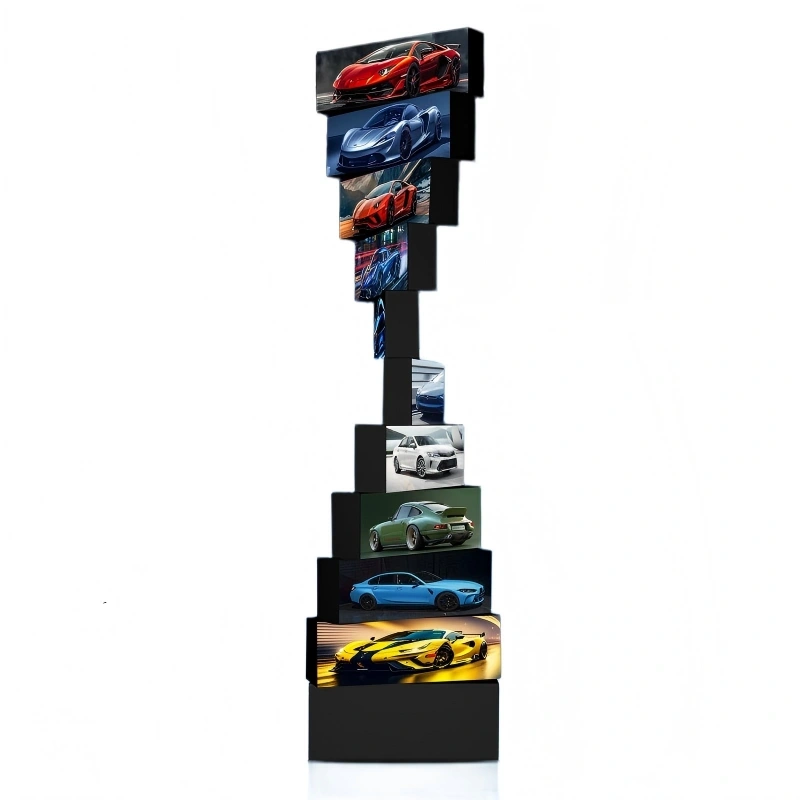
Meanwhile, a 100m² naked-eye 3D DOOH installation using the U-Rugged outdoor series can exceed six figures once structural engineering, media server synchronization, and urban permitting are included.
The key takeaway is simple: there is no universal outdoor led screen price. Every quotation is a combination of viewing distance, environmental durability, structural requirements, and revenue expectations.
The Anatomy of LED Screen Cost: Technical Drivers Behind the Quote
Two outdoor LED screens may look similar in photos while having completely different manufacturing standards underneath.
That hidden engineering layer is where long-term reliability is decided.
Wire Bonding & Packaging: Gold Wire vs. Copper Wire
One of the largest cost differences in outdoor LED displays comes from internal wire bonding.
Lower-cost screens often use copper wire packaging because copper reduces manufacturing cost. However, copper oxidizes faster in outdoor environments with high humidity, heat, and salt exposure.
Gold wire packaging costs more upfront, but it delivers:
- Better conductivity stability
- Stronger anti-oxidation performance
- Longer operational lifespan
- Lower dead-pixel probability
- Higher reliability in coastal climates
For long-term DOOH operators, the maintenance savings alone often justify the higher initial hardware cost.
Packaging technology matters as well.
Traditional SMD technology remains the mainstream solution for most outdoor advertising screens. However, GOB (Glue-on-Board) protection adds an extra transparent protective layer across the module surface.
That additional protection significantly improves:
- Waterproof performance
- Dust resistance
- Impact resistance
- Anti-collision durability
- Long-term stability in public environments
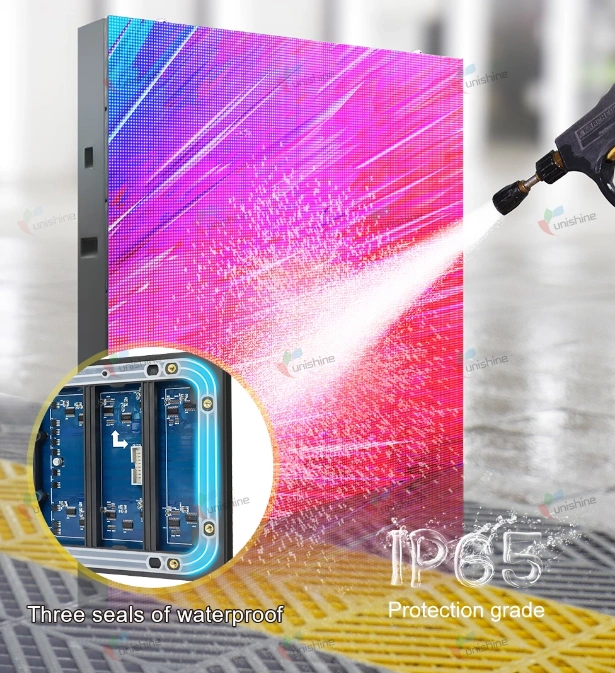
For stadiums, transportation hubs, or rental-heavy environments, GOB protection can dramatically reduce maintenance frequency.
Brightness Levels & Sunlight Visibility
Brightness is another major pricing factor in outdoor led display screen price calculations.
A standard outdoor billboard may operate effectively at 5,500 nits. However, installations facing direct sunlight, south-facing roads, or desert climates often require 7,500–8,000+ nits to maintain visibility during peak daylight hours.
Higher brightness requires:
- Stronger LED chips
- More advanced driver ICs
- Better heat dissipation
- Higher-quality power supplies
That engineering upgrade directly increases production cost.
But insufficient brightness creates an even larger problem: invisible advertising inventory during daytime operation.
For DOOH companies monetizing impressions, poor daytime visibility immediately impacts CPM performance and advertiser retention.
Cabinet Material: Iron vs. Die-Cast Aluminum
Cabinet structure also changes both installation cost and long-term operational efficiency.
Iron cabinets remain common in lower-budget projects because they are inexpensive and easy to manufacture. However, they are:
- Heavier
- More prone to corrosion
- Harder to maintain
- More expensive to lift during installation
Die-cast aluminum cabinets cost more initially but provide substantial operational advantages.
Benefits include:
- Lightweight structure
- Faster installation
- Improved thermal management
- Better corrosion resistance
- Lower structural stress
- Easier front-service maintenance
For large-scale outdoor advertising projects, lighter cabinets often reduce crane rental costs and labor hours enough to offset the higher cabinet price.
Refresh Rate & Broadcast Reliability
Refresh rate has become increasingly important as DOOH advertising shifts toward video-centric campaigns and live broadcasting.
A standard 1920Hz refresh rate may appear acceptable to the naked eye. However, cameras often capture flickering or moiré patterns during filming.
That issue becomes critical for:
- Live concerts
- Sports broadcasting
- Hybrid church events
- Commercial livestreams
- Social media campaign filming
Modern high-end outdoor systems increasingly use 3840Hz or 7680Hz refresh rate configurations.
Higher refresh rates require more advanced driver ICs and processing systems, increasing hardware cost. But they eliminate camera scan artifacts and dramatically improve broadcast professionalism.
For professional advertising operators, that difference directly affects the ability to secure premium advertising contracts.
Beyond the Screen: 5 Hidden Expenses of Outdoor Advertising Projects
Many first-time buyers underestimate how much of a project budget exists outside the LED screen itself.
In large DOOH projects, the display hardware may represent only 50–70% of total investment.
The remaining budget comes from infrastructure.
Steel Structure & Wind Load Engineering
Outdoor LED displays are exposed to hurricanes, storms, and constant environmental pressure.
Structural engineering is not optional.
Wind-load calculations determine:
- Steel thickness
- Foundation requirements
- Anchor systems
- Safety reinforcement
- Seismic resistance
Depending on local regulations, structural engineering may account for 15%–30% of total project cost.
For rooftop or highway installations, this percentage often becomes even higher.
Installation Labor & Heavy Equipment
Outdoor LED installation frequently requires:
- Cranes
- Scaffolding
- Elevated work platforms
- Licensed electricians
- Certified structural teams
In North America, labor costs alone can exceed the display hardware cost for medium-sized projects.
This is one reason why lightweight outdoor solutions continue gaining popularity among system integrators.
Permits & Regulatory Compliance
Every city handles outdoor advertising differently.
Buyers must account for:
- Billboard permits
- Zoning approvals
- Light pollution regulations
- Electrical inspections
- Public safety certification
Ignoring local compliance often delays project launch by months.
Professional manufacturers reduce this risk by providing CE, FCC, and RoHS certifications alongside technical documentation required during customs and municipal review processes.
Control Systems & Video Processing
Large outdoor displays require stable synchronized control systems.
The industry increasingly relies on Novastar ecosystems because they provide:
- Stable image transmission
- Cluster management
- Remote diagnostics
- Large-scale synchronization
- Flexible media control
Professional-grade receiving cards such as A5S A8S A10 significantly improve display reliability during long-term operation.
Low-cost alternative control systems often become failure points during peak advertising schedules.
Shipping, Logistics & Import Duties
International logistics remains one of the most misunderstood areas of LED procurement.
Shipping costs depend on:
- Total volume
- Cabinet weight
- Flight cases
- Destination country
- Transportation method
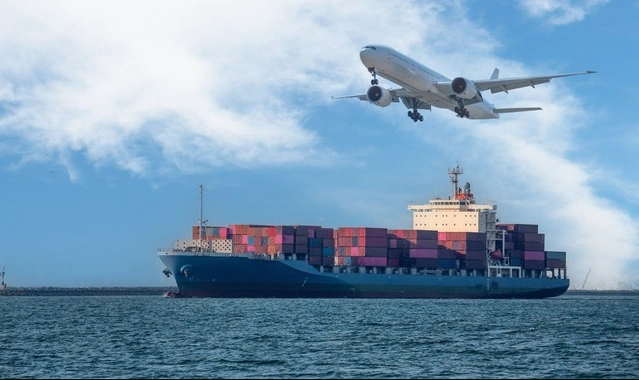
Air freight works best for urgent rental projects but costs substantially more.
Sea freight remains the preferred solution for permanent outdoor installations because it lowers transportation cost per square meter.
Import duties, customs brokerage fees, local taxes, and insurance must also be included in budget planning.
For buyers importing from Shenzhen, working directly with a factory supplier can reduce intermediary markup by as much as 30% compared with regional distribution chains.
Special Scenario Engineering: Ensuring Longevity & Cutting OpEx
Outdoor LED projects succeed or fail based on environmental adaptation.
A billboard designed for dry inland climates may fail rapidly in coastal cities.
Coastal & High-Humidity Protection
Cities such as Miami, Los Angeles, and Singapore expose outdoor displays to salt spray and heavy humidity year-round.
Without anti-corrosion treatment, metal oxidation accelerates rapidly.
Professional outdoor systems therefore prioritize:
- IP65/IP66 waterproof ratings
- Corrosion-resistant cabinet coatings
- Sealed power systems
- Moisture-resistant module design
The U-Shield outdoor fixed installation series is engineered specifically for these long-cycle operational conditions, combining high-brightness output with reinforced waterproof architecture and extended aging verification.
Heat Management & Thermal Stability
Heat is another major long-term threat.
Poor thermal design leads to:
- Dead pixels
- Color inconsistency
- Power instability
- Reduced brightness lifespan
Advanced outdoor displays increasingly use optimized passive cooling combined with intelligent thermal airflow architecture to maintain stable performance even in high-temperature environments.
Energy Efficiency & Operational Savings
Electricity consumption becomes a serious long-term operational cost in large DOOH networks.
Energy-saving driver ICs and optimized power management systems may increase upfront purchasing cost slightly, but they significantly reduce long-term operating expenses.
Over a five-year operational cycle, efficient systems often recover the initial price difference entirely through lower electricity consumption.
**The cheapest outdoor LED screen rarely delivers the lowest long-term ownership cost.**
ROI Focus: Calculating Your Advertising Revenue Potential
Outdoor LED screens are not merely hardware purchases. They are revenue-generation infrastructure.
Traditional static billboards display one advertiser at a time.
Digital out-of-home (DOOH) systems allow operators to rotate multiple campaigns simultaneously, dramatically increasing advertising inventory value.
A single outdoor LED billboard can display:
- Brand campaigns
- Time-based promotions
- Live event sponsorships
- Interactive advertisements
- Emergency public messaging
This flexibility significantly improves CPM (Cost Per Thousand Impressions) efficiency.
For example, a traditional printed billboard generating one monthly advertising contract may transform into a rotating digital advertising platform supporting multiple advertisers simultaneously.
That operational flexibility often shortens project payback periods dramatically.
Long-term ROI also depends heavily on hardware lifespan.
High-quality outdoor LED systems designed around stable power supplies, premium driver ICs, and reliable diode selection can achieve operational lifespans approaching 100,000 hours under proper maintenance conditions.
That extended lifecycle lowers annual depreciation cost while maximizing long-term advertising profitability.
Professional FAQ: Strategic Commercial Procurement Insights
Why does a P6 outdoor screen cost significantly more than a P10 display?
P6 screens contain substantially higher LED density per square meter, increasing manufacturing complexity, driver requirements, and overall visual precision. They are designed for closer viewing distances and higher-definition advertising environments.
How should buyers choose between front-service and rear-service outdoor cabinets?
Front-service cabinets simplify maintenance in locations with limited rear access. Although front-service systems usually cost more initially, they reduce long-term maintenance difficulty and installation space requirements.
Do outdoor LED billboards require additional cooling systems?
Not always. Modern high-quality outdoor displays often rely on optimized passive cooling architecture. However, extreme desert climates or enclosed installations may still require industrial cooling support.
How can buyers verify outdoor structural safety for imported LED screens?
Professional suppliers should provide wind-load engineering calculations, cabinet weight specifications, certification documentation, and structural integration support aligned with local engineering standards.
How does Unishine support wholesalers and OEM/ODM partners?
Unishine provides factory-direct pricing structures, customizable OEM/ODM manufacturing, spare parts support, remote technical assistance, and long-term warranty programs designed for global B2B distribution networks.
How do naked-eye 3D LED billboards differ from traditional flat outdoor displays?
Naked-eye 3D systems such as the U-MAX series require specialized corner configurations, advanced synchronization architecture, and high-end content production workflows. Hardware investment and creative production costs are therefore substantially higher than standard flat-screen installations.
Securing Your Digital Infrastructure with Precision
Outdoor LED display pricing is never just a hardware discussion.
It is a combination of structural engineering, brightness science, environmental protection, operational efficiency, control stability, and long-term advertising economics.
Buyers who focus exclusively on the lowest quotation often discover hidden costs later through maintenance failures, regulatory delays, or shortened display lifespan.
The smarter approach is to evaluate the full investment architecture from day one.
For DOOH operators, AV integrators, wholesalers, churches, and commercial developers, the most profitable outdoor LED project is usually the one engineered for long-term reliability rather than short-term savings.
If you are currently planning an outdoor advertising display, retail billboard, church installation, transportation project, or large-scale DOOH deployment, providing accurate project dimensions, viewing distance requirements, installation environment, and project timeline will dramatically improve quotation accuracy.
With factory-direct manufacturing, certified production standards, advanced QC systems, and customized OEM/ODM support, Unishine LED helps global buyers transform complex outdoor display procurement into a predictable and scalable digital infrastructure investment.