Defining the Total Cost of Ownership (TCO) in Digital Signage
For global advertising conglomerates, church administrators, and AV system integrators, the transition to digital display technology often begins with a critical search for the led billboard cost. However, in the high-stakes world of Digital Out-of-Home (DOOH) and large-scale visual infrastructure, the sticker price is only one fragment of the financial puzzle.
At Unishine LED , with over 20 years of manufacturing excellence and a footprint spanning 90+ countries, we define a successful project not by its purchase price, but by its Total Cost of Ownership (TCO). When evaluating the electronic billboard cost, one must understand that a professional-grade display is a “business asset,” not a “commodity expense.”
The 5:5 Financial Equilibrium
Industry data from Unishine’s global deployments indicates that for a permanent outdoor installation, the ratio between Hardware (CAPEX) and Deployment/Infrastructure is often 5:5. This means that if the led screen cost for the panels is $50,000, a similar amount must be intelligently budgeted for structural engineering, power management, and long-term operational expenditures (OPEX). By establishing this framework early, investors can ensure their visual assets remain profitable for over a decade.
Quick Project Estimate
Get a factory-direct quote and customized TCO analysis.
Hardware CAPEX: The Pricing Mechanisms of Core Technology
Why does one quote for an electronic billboard cost vary by 50% from another? The answer lies in the microscopic precision of the components and the technical architecture of the LED modules.
1. The Pixel Pitch Pricing Weight
The led screen cost is primarily dictated by pixel density. While a P10 (10mm spacing) is suitable for high-altitude highway billboards, a P3 or P4 is required for street-level engagement.
P10/P8: High ROI for long-distance viewing; lower diode density results in lower power consumption.
P3/P4: Higher CAPEX due to the exponential increase in the number of LED lamps per square meter, providing the “retina-grade” clarity required for high-end retail and Naked-Eye 3D solutions.
2. LED Lamps and Brightness (The “Nit” Factor)
Outdoor environments require extreme luminance (6,000 to 8,500 Nits) to remain visible under direct sunlight. Achieving this brightness without causing premature diode decay requires high-quality LED lamps (such as Nationstar or Kinglight) and advanced thermal management. A “budget” screen might hit these nits initially, but the led billboard cost will rise over time as the lack of heat dissipation leads to rapid color shifting and brightness loss.
3. Control Systems & High-Resolution Precision
Integrating industry-standard components like the MRV532 receiving card is essential for maintaining a high refresh rate (3840Hz to 7680Hz). This ensures that dynamic advertising content remains flicker-free on cameras—a non-negotiable requirement for modern DOOH firms and live broadcast events.
Infrastructure and Hidden Costs: The “Below-the-Line” Budget
For AV engineers and system integrators, the led billboard cost extends far beyond the shipping crate. Navigating the “Hidden” 50% of the project budget is where professional expertise becomes invaluable.
Expert Transition: Navigating the complexities of a physical installation requires a strategic lens; the following checklist outlines the essential infrastructure elements that must be factored into your primary budget to ensure structural integrity and legal compliance.
Digital Billboard Infrastructure Checklist
- ✔ Structural Load: Certified steel framing to withstand up to 150mph wind gusts.
- ✔ Power & Management: High-amperage distribution boxes with intelligent surge protection.
- ✔ Regulatory Compliance: Municipal permits, light pollution tests, and structure safety audits.
Quality Engineering: Optimizing OPEX Through Manufacturing Excellence
The most effective way to lower the long-term electronic billboard cost is to prevent failures at the source. At Unishine, we turn our factory floor into your savings plan.
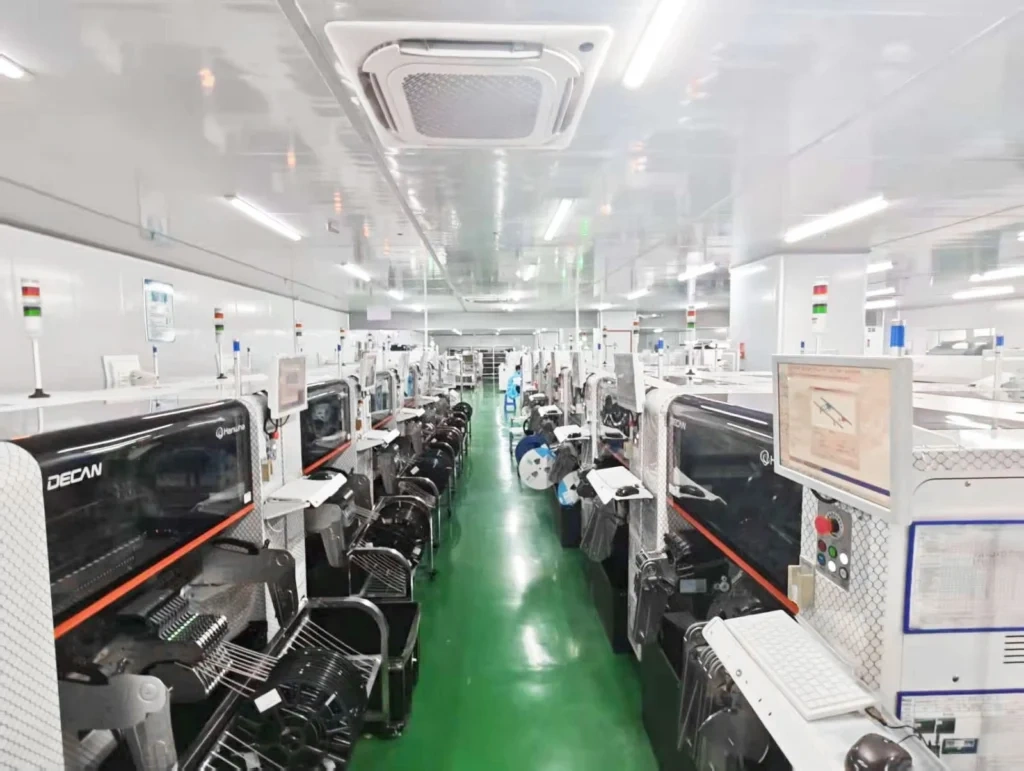
Automated SMT Stability: With 18+ high-speed SMT lines, we ensure that every one of the millions of pixels on your billboard is soldered with absolute consistency, drastically reducing the “dead pixel” rate over a 5-year period.
3D SPI (Solder Paste Inspection): This laser-mapping technology catches microscopic defects that traditional human inspection misses. By ensuring a perfect electrical bond, we increase the Mean Time Between Failures (MTBF), saving you thousands in on-site technician fees.
Environmental Stress Testing: Every Unishine Outdoor Module is subjected to a 72-hour aging test and vibration simulation, ensuring the led screen cost includes the resilience needed for extreme weather (IP67 protection).
Unishine’s factory-level quality controls are designed to eliminate hidden “failure costs” before the product ships; here is how our manufacturing standards translate into lower OPEX for your project.
Reliability Engineering Standards:
- • 3D SPI Inspection: Minimizes soldering flaws, ensuring a 99.9% pixel reliability rate.
- • 72H Stress Aging: Full-load burn-in ensures peak performance in extreme environments.
Scaling the Project: ROI Models and Revenue Generation
For an advertising agency or a church administrator, the led billboard cost is only justifiable when mapped against a clear return on investment. In this section, we transition from discussing “what it costs” to “what it earns.”
1. Iconic Roadside Billboards (The Heavy Assets)
A standard 20×60 ft highway billboard is a long-term capital investment. While the initial electronic billboard cost for such a scale is high, the durability of Unishine’s Outdoor Fixed Series ensures a 10-year service life.
The Revenue Model: High-nit (8000+) performance allows for 24/7 ad rotations. In Tier-1 cities, the payback period for a high-quality LED billboard is typically 14–22 months, after which it becomes a pure profit-generating engine.
2. The 3D Visual Premium: U-MAX Architecture
One of the most significant shifts in the 2026 market is the Naked-Eye 3D Billboard. By utilizing Unishine’s U-max series, advertisers are no longer just selling space; they are selling “spectacle.”
Strategy: 3D content increases viewer dwell time by 400%.
ROI Factor: Media owners can command ad rates 30–50% higher than 2D screens, significantly accelerating the recovery of the led screen cost.
3. Houses of Worship: Replacing Projectors
For American churches, the ROI is measured in community engagement and reduced maintenance.
Strategy: Our U-max provides an indoor high-definition solution that replaces traditional projection.
ROI Factor: Eliminating bulb replacements and energy-heavy cooling systems reduces OPEX by 60% over 5 years.
Global Procurement: Logistics, Taxes, and Compliance
For international wholesalers and system integrators, the led billboard cost on the factory floor is different from the landed cost at your warehouse. Managing this gap requires a partner with global logistics intelligence.
Navigating the complexities of international trade requires a strategic lens; to ensure your investment is protected from regulatory friction, we recommend auditing your procurement process against the following professional benchmarks.
Investment FAQ: Addressing Strategic Concerns
Q: Why do energy consumption costs vary so significantly between electronic billboards?
A: This is due to the driving architecture. Unishine utilizes Common Cathode technology, which supplies power separately to the Red, Green, and Blue chips. This reduces heat dissipation and cuts energy OPEX by up to 30%, which can save tens of thousands of dollars over the billboard’s lifespan.
Q: In coastal or high-humidity environments, how much does anti-corrosion protection add to the cost?
A: Typically, marine-grade protection (fully sealed modules and gold-plated connectors) increases the led billboard cost by 10-15%. However, without it, an outdoor screen in a salty environment may fail within 18 months, leading to a total loss of investment.
Q: What is the 5-year resale value of a Unishine LED billboard?
A: High-quality billboards with branded LEDs (Nationstar/Kinglight) and high-tier ICs retain roughly 30-40% of their value after five years, whereas “no-name” budget screens often have zero technical residual value.
Q: How does 3D SPI (Solder Paste Inspection) impact the project’s MTBF?
A: SPI ensures a perfect solder bond for every one of the millions of pixels. This directly increases the Mean Time Between Failures (MTBF), ensuring your billboard remains operational for months at a time without needing a single service call.
Q: Does Unishine support tiered pricing for wholesalers or OEM partners?
A: Yes. We provide scalable pricing models and white-labeling services for OEM/ODM partners, allowing them to maintain healthy margins while delivering factory-direct quality. Inquire for our wholesaler price list.
Balancing Performance and Capital Discipline
The search for the “perfect” led billboard cost should not lead to a compromise in reliability. As we have demonstrated, the most successful visual infrastructure projects are those that prioritize high-tier manufacturing standards, energy-efficient architecture, and robust engineering over the lowest possible sticker price.
At Unishine LED, our goal is to help you achieve the equilibrium between visual performance and long-term capital discipline. By choosing a partner that integrates 3D SPI testing, global compliance, and specialized industry solutions, you are securing an asset that will engage audiences and generate revenue for a decade to come.
Maximize Your Digital ROI
Ready to see the financial projection for your project? Connect with our senior engineers today.
Get Your Custom Project Quote →