When buyers search for terms like indoor led display screen price or indoor led screen price, they are rarely looking for a simple number. Most decision-makers are trying to answer a much bigger question: “How do we avoid overspending while still getting a reliable, future-proof display system?”
That challenge has become harder in 2026. Global pricing for indoor LED displays now ranges anywhere from under $600 per square meter to more than $3,000 per square meter, even for products that appear visually similar on paper. For non-technical buyers, the market can feel intentionally opaque. Some suppliers compete aggressively on low pricing while quietly reducing LED chip quality, lowering refresh rates, or using unstable control systems that create expensive problems after installation.
At the same time, over-specification creates another hidden cost trap. Many companies purchase ultra-fine pixel pitch displays that exceed their actual viewing distance requirements, adding unnecessary CAPEX without improving real-world visual performance.
This is where a manufacturing-first perspective matters.
As a high-tech LED display manufacturer with more than 20 years of engineering experience, Unishine operates a 10,000㎡ automated production base equipped with 18+ high-speed SMT production lines, SPI inspection systems, and advanced COB packaging technology. Instead of treating pricing as a sales tactic, Unishine approaches indoor LED display architecture as a long-term digital asset investment strategy.
The goal is not simply to lower the initial purchase cost. The goal is to optimize Total Cost of Ownership (TCO), operational stability, maintenance efficiency, and long-term ROI.
The Baseline: 2026 Global Price Matrix for Indoor LED Screens
Before discussing engineering variables, buyers first need a realistic understanding of current global market pricing.
The table below outlines the average factory-direct price ranges for mainstream indoor LED display categories in 2026, along with the optimal viewing distance methodology procurement teams should use during budget planning.
2026 Indoor LED Price Matrix & Viewing Distance Optimization
One of the biggest misconceptions in indoor LED procurement is the belief that smaller pixel pitch always means better value.
In reality, the correct specification depends entirely on viewing distance.
A widely accepted industry formula is:
Pixel Pitch × 10 = Minimum Viewing Distance
For example:
- P1.5 → approximately 1.5 meters
- P2.5 → approximately 2.5 meters
- P3.91 → approximately 4 meters
This means a church audience sitting 6 meters away gains almost no visible benefit from choosing P1.2 instead of P2.5, despite paying significantly more for the finer pixel pitch.
For system integrators and AV consultants, this formula becomes one of the most important tools in avoiding unnecessary over-configuration.
Ultra Fine Pitch: Why COB Commands Premium Pricing
Displays below P1.25 occupy the premium end of the indoor LED screen price spectrum.
The reason is manufacturing complexity.
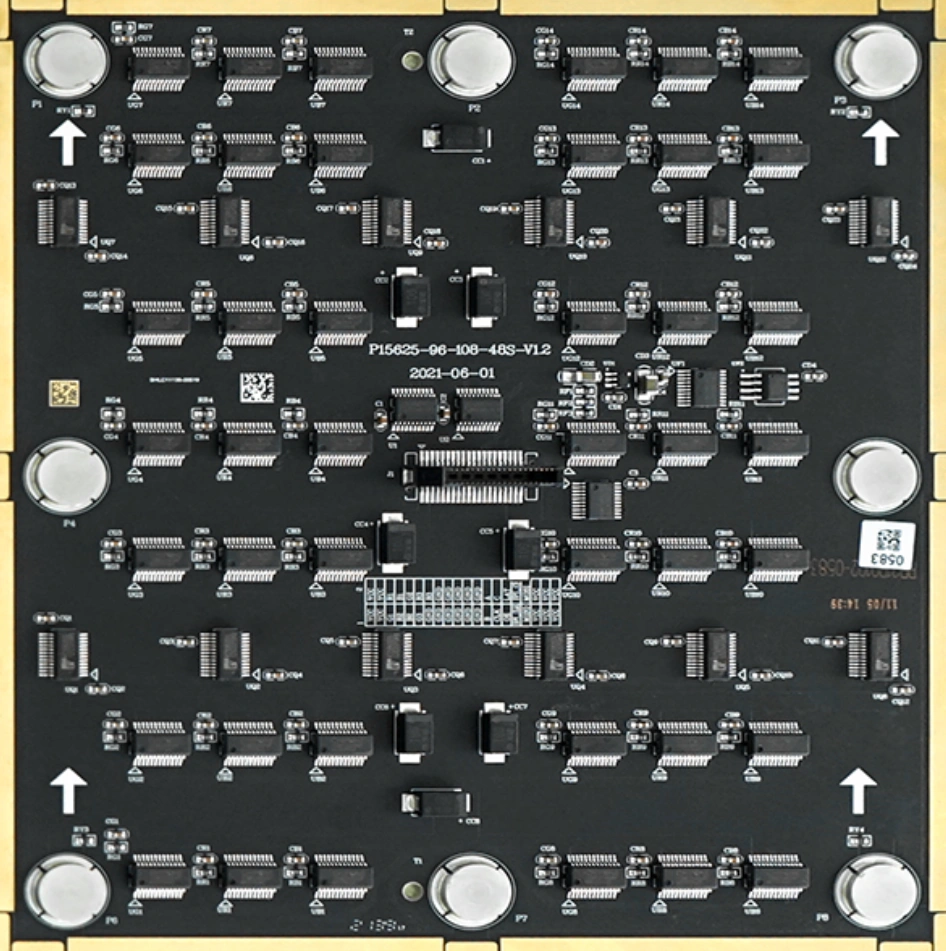
At these densities, traditional SMD packaging begins to encounter physical limitations related to alignment accuracy, thermal dissipation, and pixel stability. COB (Chip-on-Board) packaging addresses these limitations by mounting LED chips directly onto the PCB substrate.
Unishine’s flip-chip COB architecture improves:
- Surface durability
- Impact resistance
- Heat management
- Moisture protection
- Long-term uniformity
For mission-critical applications like command centers, broadcast environments, and high-end executive spaces, COB significantly reduces maintenance frequency over the product lifecycle.
This is why COB systems often carry higher upfront pricing while simultaneously lowering long-term operational cost.
The Commercial Sweet Spot: P1.5 to P2.5
For most corporate meeting rooms, churches, educational institutions, and retail spaces, P1.5 to P2.5 remains the strongest balance between visual quality and ROI.
This is where products like the U-Panel and U-PAD series are designed to operate.
In church environments specifically, indoor LED displays increasingly replace projectors because they eliminate washout under ambient lighting conditions. Churches no longer need to dim lighting during worship sessions, which improves audience engagement while reducing ongoing projector lamp replacement costs.
Large-Scale Commercial Displays & Rental Applications
For retail flagship stores, exhibition halls, and indoor event stages, larger pixel pitches such as P2.9 and P3.91 provide strong budget efficiency for large-format walls.
Products like U-Rent and U-RP prioritize:
- Fast assembly
- Lightweight cabinet structures
- Touring durability
- High refresh rates
- Reduced transportation costs
For rental companies managing frequent deployment cycles, durability often matters more than ultra-fine resolution.
Decoding the “Price DNA”: 4 Engineering Indicators Driving Production Cost
🧬 The 4 Cost Drivers Behind Indoor LED Screen Pricing
Packaging technology directly affects durability, maintenance frequency and lifespan.
Professional systems like Novastar improve signal stability and future scalability.
3840Hz–7680Hz refresh rates are critical for livestreaming and camera applications.
Premium diodes deliver better color consistency and slower brightness degradation.
Two indoor LED screens can look nearly identical in marketing photos while having dramatically different manufacturing costs and long-term reliability.
The true difference lies inside the engineering architecture.
Packaging Technology: COB vs. SMD
The debate between COB and SMD continues to shape the indoor led display screen price market.
Traditional SMD remains the mainstream option due to its lower manufacturing cost and mature production ecosystem. However, it also exposes solder joints on the display surface, making the screen more vulnerable to physical damage.
COB changes this equation.
By encapsulating LED chips directly onto the board, COB eliminates exposed solder points and creates a smoother protective surface.
The long-term advantages include:
- Lower dead pixel rates
- Better resistance to accidental impact
- Easier cleaning
- Improved lifespan consistency
- Lower future maintenance costs
This matters especially for churches, retail environments, and public-facing installations where displays operate continuously.
Processing Power & Control Systems
One of the most overlooked cost drivers in indoor LED systems is the control architecture.
Professional-grade control systems directly affect:
- Signal stability
- Color consistency
- Synchronization
- Data transmission reliability
- Future scalability
This is why Novastar remains the industry standard for professional indoor LED applications.
Components like the Novastar MRV532 receiving card are widely adopted because they provide reliable grayscale performance, strong loading capability, and stable communication under long operating cycles.
Lower-cost alternatives may initially reduce project pricing but frequently introduce issues such as:
- Flickering
- Color inconsistency
- Signal interruption
- Calibration instability
For large corporate or worship installations, these risks often outweigh any short-term savings.
Refresh Rate & Broadcast Reliability
Refresh rate has become increasingly important as hybrid events, livestreaming, and digital broadcasting continue expanding.
A display operating at 1920Hz may appear acceptable to the human eye while producing severe scan-line artifacts on professional cameras.
This becomes especially problematic during:
- Corporate livestreams
- Church worship broadcasts
- Esports productions
- Virtual production environments
- Concert filming
Displays operating at 3840Hz already provide strong camera performance, but 7680Hz systems deliver significantly smoother capture under high-frame-rate cameras.
While higher refresh rate ICs increase manufacturing cost, they dramatically improve broadcast reliability and eliminate moiré patterns during filming.
LED Diode Selection & Binning Standards
Not all LED chips are manufactured equally.
Premium diode suppliers such as Nationstar maintain tighter wavelength consistency, stronger brightness uniformity, and lower degradation rates over time.
Cheaper unbranded LEDs may reduce initial indoor led screen price per square meter, but they frequently create:
- Uneven color aging
- Brightness inconsistency
- Faster luminance decay
- Increased dead pixel frequency
Over a five-year operating cycle, premium diode selection often becomes more economical despite higher initial pricing.
The Freight & Customs Gap: Navigating Global Logistics from Shenzhen to Your Site
One of the largest information gaps in the industry involves international shipping, customs clearance, and import budgeting.
Most competitors avoid discussing these issues entirely.
For overseas buyers, however, logistics can significantly impact total project cost.
Why Shenzhen Dominates the Global LED Industry
More than 90% of the global LED display supply chain is concentrated in Shenzhen.
This creates major advantages:
- Faster component sourcing
- Lower manufacturing cost
- Mature engineering ecosystems
- Integrated logistics infrastructure
- Shorter production cycles
Because Unishine operates directly within this ecosystem, buyers avoid multiple layers of distributor markup that often increase overseas project costs by 20%–30%.
Air Freight vs. Sea Freight
Different projects require different shipping strategies.
Air freight is typically used for:
- Urgent stage rental deployments
- Time-sensitive exhibitions
- Emergency replacement orders
Sea freight is generally preferred for:
- Fixed commercial installations
- Large churches
- Corporate headquarters
- Retail display projects
Flight cases also play an important role for touring environments. While they increase shipping volume and upfront cost, they dramatically reduce cabinet damage during repeated transport cycles.

Customs, Duties & Compliance Risk Management
Import duties and customs compliance vary significantly by region.
For North America and Europe, buyers must prepare for:
- Import duties
- VAT or local taxes
- Customs brokerage fees
- Port handling charges
- Warehousing costs during inspections
Certifications become critical during customs clearance.
Professional indoor LED displays should include:
- CE certification
- FCC certification
- RoHS compliance
Unishine also performs 72-hour full-screen aging tests before shipment to ensure system stability before export.
This reduces the risk of project delays caused by defective modules discovered after installation.
Total Cost of Ownership (TCO): Hidden Costs in Your Budget Matrix
The purchase price of the screen itself is only one portion of the overall investment.
Many buyers underestimate the operational and infrastructure costs surrounding indoor LED systems.
Structural Engineering & Installation
Steel support structures often represent 10%–20% of total project budget.
Factors influencing installation cost include:
- Wall load-bearing capacity
- Ceiling reinforcement
- Curved structures
- Front-service accessibility
- Cable routing complexity
Ignoring these factors during budgeting often creates unexpected overruns.
Front-Service vs. Rear-Service Architecture
Front-service systems like the U-DM series typically cost more upfront because they integrate magnetic module access and precision maintenance mechanisms.
However, front-service architecture eliminates the need for rear maintenance walkways.
For office spaces, retail storefronts, and commercial properties where every square meter carries rental value, this creates substantial long-term space savings.
Operational Power Consumption
Electricity usage becomes increasingly important for large indoor LED installations operating daily.
Buyers should evaluate:
- Maximum power consumption
- Average operating consumption
- Energy-saving IC technology
- Brightness calibration efficiency
Over a five-year operational cycle, energy-efficient systems can significantly reduce OPEX.
Professional FAQ: Strategic Procurement Insights
Why is indoor LED display pricing significantly higher than LCD video walls?
Indoor LED displays eliminate bezels entirely, provide higher brightness, deliver better scalability, and often exceed 100,000 hours of operational lifespan. Over long operating cycles, LED systems frequently outperform LCD walls in both maintenance and visual consistency.
What is the cost difference between front-service and rear-service systems?
Front-service systems generally cost more at the hardware level but reduce space requirements and future maintenance complexity. Rear-service systems may reduce upfront budget but require dedicated maintenance access space.
For churches and stage events, should buyers choose fixed installation cabinets or rental cabinets?
Rental cabinets like U-RENT and U-STAGE prioritize portability and repeated assembly. Fixed installation systems prioritize structural integration and cost efficiency for permanent environments.
How can buyers ensure imported LED screens comply with local regulations?
Professional manufacturers should provide CE, FCC, and RoHS certifications along with electrical documentation and aging test records.
What happens if dead pixels appear during the warranty period?
Professional suppliers provide spare parts kits and replacement module mechanisms to simplify long-term maintenance.
Is there a transparent display solution for bright indoor retail environments?
Yes. Transparent display systems like the U-Max series provide strong visual impact while maintaining storefront visibility and reducing structural obstruction.
Formulating Your Custom Digital Asset Architecture
Indoor LED display procurement is no longer simply about finding the lowest indoor led screen price.
The real challenge is balancing:
- Technical performance
- Long-term maintenance
- Operational efficiency
- Installation architecture
- Logistics risk
- Lifecycle ROI
The most successful projects are built on transparent engineering standards, realistic viewing-distance planning, and long-term ownership strategy.
Whether you are designing a church display, upgrading a corporate headquarters, building a retail flagship experience, or deploying a large-scale indoor stage, the right LED architecture should function as a long-term digital asset rather than a short-term hardware purchase.
By providing your screen dimensions, installation environment, viewing distance requirements, and project status, Unishine’s engineering team can help formulate a customized factory-direct solution tailored to your operational and financial objectives.
Get a Factory-Direct Indoor LED Display Quote
Tell us your screen size, viewing distance, installation environment and project timeline. Our engineering team will recommend the most cost-effective LED solution based on your actual ROI goals.
Request Your Custom Quotation →