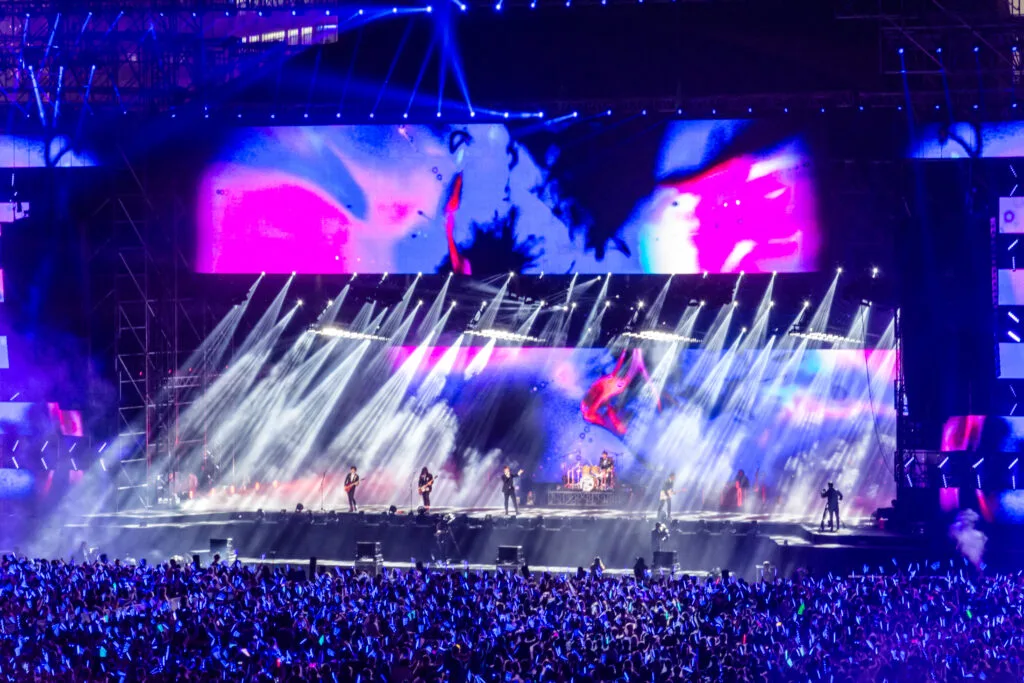
What makes a stage led screen road-ready for professional US touring?
In the demanding world of North American concert touring and high-end event production, the hardware is subjected to extreme physical stress. A stage led screen is not a static piece of equipment; it is a “road warrior” that must survive thousands of miles in the back of a vibration-heavy truck and countless cycles of being rigged and struck. To achieve this, a high quality led stage panel must be built with a chassis that balances structural rigidity with lightweight portability. Most premium panels today utilize high-grade die-cast aluminum or magnesium-aluminum alloys. These materials provide the necessary tensile strength to prevent the frame from warping under the weight of a 50-foot-tall hang while keeping the weight per panel low enough for a single stagehand to manage.
The mechanical precision of these frames is what separates a world-class wholesaler from a low-end supplier. For a seamless concert led screen, the tolerance of the cabinet edges must be less than 0.1mm. Even a microscopic gap can result in visible “bright lines” or “dark lines” that ruin the immersion of the visual content. Furthermore, the high quality of the connectors—typically using gold-plated aviation-grade plugs—ensures that power and signal flow remain uninterrupted despite the constant plugging and unplugging that occurs during a 30-city tour. When choosing screens for events, technical directors prioritize these mechanical details because they directly impact the lifespan of the rental fleet and the safety of the crew on the ground.
Why does high-frequency refresh rate determine the success of a concert led screen?
If you have ever watched a live broadcast and noticed strange wavy lines or flickering on the background screens, you have seen the result of an insufficient refresh rate. For a concert led screen, the interaction between the LED hardware and professional broadcast cameras is a critical technical hurdle. Most high-end led wall rental solutions now demand a refresh rate of at least 3840Hz, with flagship ODM designs pushing toward 7680Hz. This is achieved through high-performance driver ICs (Integrated Circuits) that manage the PWM (Pulse Width Modulation) of each individual pixel.
Beyond just the refresh rate, “Scan Mode” and “Grayscale Depth” are equally vital. In the US market, where cinematic visual style is preferred, a high quality stage led screen must maintain 16-bit or even 22-bit grayscale even at low brightness levels. Cheap screens often lose detail in the shadows, turning dark gradients into blocky, “stepped” artifacts. By working with a led display factory that offers custom PCB designs, wholesaler partners can specify high-gray-scale driver chips that ensure the lead singer’s face looks natural and vibrant under the harsh glare of stage spotlights. This level of electronic engineering is what allows screens for events to look just as good on a 4K television broadcast as they do to the fans in the front row.
How to ensure lightning-fast assembly for big screen events?
Time is the most expensive commodity in the US event industry. Union labor costs and tight venue windows mean that every minute saved during the “load-in” process directly increases a rental company’s profit. This is where the mechanical ODM innovation of “Fast-Setup” systems becomes essential. A high quality led wall rental system features ergonomic handles and a unique quick-lock mechanism. These locks are engineered to provide a “click-and-go” feedback, allowing a single technician to align and secure two cabinets with one hand.
The custom design of the guiding pins is another small but vital technical detail. High-precision pins ensure that the modules auto-align as they are brought together, preventing the accidental crushing of LEDs on the cabinet edges. As a leading led display supplier, we also integrate “Magnetic Auto-Positioning” in our OEM designs. This technology uses internal magnets to hold the weight of the cabinet momentarily while the technician engages the physical lock. For a wholesaler, being able to demonstrate that their stage screens can be built 30% faster than the competition is a powerful selling point when bidding on major festival contracts where setup windows are measured in minutes, not hours.
Why is led screen truss compatibility the most critical safety feature?
Safety is the silent pillar of the led wall rental business. When hanging a 5-ton concert led screen above a crowd of 20,000 people, the structural integrity of the led screen truss connection is paramount. Professional stage led screen systems must include certified rigging points that are integrated into the internal frame, not just bolted to the outside. A high quality led stage panel will come with detailed “Load Calculation” charts provided by the led display factory, specifying the maximum number of cabinets that can be hung in a single column based on safety factors (typically 10:1 or 12:1 in the US).
Wind loading is another technical challenge for screens for events held outdoors. A solid LED wall acts like a massive sail, capable of toppling even heavy-duty led screen truss towers in a sudden gust. Advanced custom engineering has led to the development of “Carbon Fiber” frames and “Touring Frames” with built-in wind-bracing. These frames allow the led stage panel to be reinforced from the back with a secondary steel or aluminum lattice, transferring the wind pressure directly to the ground support system. For a wholesaler, ensuring that every custom led display order includes the correct, certified rigging bars is not just a service—it is a legal and ethical necessity in the American market.
How to perform emergency repairs on a led stage panel during a live event?
In the live event world, things will eventually go wrong. A stray drumstick might hit a screen, or a power surge could knock out a receiving card. The technical superiority of a high quality stage screens system is proven by how quickly it can be repaired under pressure. Modern led stage panel designs utilize a “Modular Power Box” or “Independent Hub” system. This means the electronics (power supply and receiving card) are housed in a single, detachable unit that can be swapped out in under 30 seconds without tools.
For the LED modules themselves, custom magnetic front-service technology allows a technician to pull a faulty module from the front of the wall even while the rest of the screen is active. This is a game-changer for concert led screen setups where the back of the screen is blocked by lighting rigs or scenery. Additionally, professional led screen manufacturers implement “Dual Signal & Power Redundancy.” If the primary data cable is severed, the signal instantly reroutes from the bottom of the column in the opposite direction. For a wholesaler, selling a system with these “fail-safe” features provides the ultimate insurance policy for their clients, ensuring that the show always goes on.
Why does the color binning process define a high quality stage backdrop?
The high quality of a stage backdrop is often decided months before the LEDs are ever soldered. “Binning” is the technical process of sorting LED chips by their exact wavelength (color) and luminous intensity (brightness). In a high quality led display factory, we use a “One-Bin-Only” policy for every custom stage project. If a wholesaler mixes different bins, the screen will look like a “quilt” of different shades when displaying a solid white or gray background.
This attention to detail extends to the “Calibration Data” stored on each module. In a professional led wall rental fleet, modules are often swapped between different projects. A high quality system will automatically “read” the calibration data from the new module and match it to the surrounding panels, ensuring a 100% uniform image across the entire concert led screen. This custom software integration is a hallmark of premium OEM manufacturing and is the reason why Unishine products maintain their visual perfection over years of heavy rental use.
Technical FAQ for Stage LED Engineering
What is the weight limit for a standard 500x500mm led stage panel?
A high quality die-cast aluminum panel typically weighs between 15lbs and 18lbs (7-8kg). This allows for a led screen truss hang of up to 20-25 panels high depending on the hoist capacity.
Can stage screens handle rain and dust during outdoor festivals?
Yes. Professional outdoor screens for events are IP65 rated, featuring fully encapsulated high quality modules and waterproof power/data connectors to ensure operation in heavy rain.
What is signal redundancy in a rental led wall?
It is a fail-safe system where each led stage panel is connected to two separate data paths. If one path fails, the backup takes over instantly without a flicker.
How do I match the color of my stage screens with the venue’s lighting?
Through the custom control software, you can adjust the “Color Temperature” (measured in Kelvin) of the LED wall to match the warm or cool tones of the stage spotlights for a unified look.
Engineering a successful event backdrop requires a deep synergy between mechanical stability and electronic precision. By investing in high quality stage screens that prioritize ease of setup, structural safety, and broadcast-level visual performance, you are securing the future of your production business. Whether you are a wholesaler looking to provide the best tools to your local market or an integrator designing a custom touring rig, the technical details are where the magic happens. Let Unishine LED be your partner in OEM/ODM innovation, providing the high quality engineering your vision deserves. Contact our technical team today for a deep-dive consultation on your next concert led screen project.