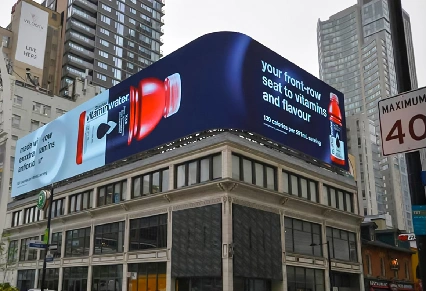
From Static Price to Lifecycle Asset Management (TCO)
For many decision-makers in the United States—whether you are a church administrator looking to replace an aging, dim projector or a DOOH (Digital Out-of-Home) firm planning a high-traffic urban landmark—the journey often starts with a simple Google search for the current led wall cost. However, the most significant trap in the professional AV industry is treating a display wall as a one-time purchase.
At Unishine LED , with over 20 years of manufacturing experience, we advocate for a shift toward Total Cost of Ownership (TCO). When you evaluate a led wall price, you are not just buying panels; you are acquiring a mission-critical visual asset. A low-quality led screen wall price might look attractive on a spreadsheet today, but when you factor in the 5-year operational decay, the cost of “cheap” hardware can be 200% higher than a premium investment.
Planning a project and need an accurate budget estimate?
Request a technical cost breakdown for your specific dimensions →The Three-Dimensional Budget Framework
1. Hardware Acquisition (Capex): This covers the led wall panels, internal components like the MRV532 receiving cards, and the raw high-refresh driving ICs.
2. Deployment & Engineering: This includes the structural steel certification, thermal management, and electrical distribution—elements often left off a standard factory quote.
3. Operation & Maintenance (Opex): Energy consumption (mitigated by GaN technology), content synchronization, and preventative maintenance protocols.
By viewing your display as an asset that generates value (engagement, ad revenue, or brand prestige), you move away from “cost-cutting” and toward “value-optimization.”
Technical Metrics: The Physical Basis of the LED Wall Panel Price
Why does a P1.2 screen cost significantly more than a P2.5 screen of the same size? It isn’t just a “premium” brand tax; it is rooted in the physical complexity of the manufacturing process.
1. The Pixel Pitch Cost Curve
The pixel pitch pricing is exponential, not linear. When you reduce the pitch from P2.5 to P1.2, you are not just “doubling” the resolution. You are increasing the pixel density by four times. This requires:
● Four times the number of LED diodes per square meter.
● Four times the SMT (Surface Mount Technology) placement time.
● Significantly higher precision in PCB (Printed Circuit Board) design to manage the increased heat and data throughput.
Encapsulation Technology: SMD vs. COB (Chip-on-Board)
The led wall display price is also heavily influenced by how the LED chips are protected.
● SMD (Surface Mounted Device): The industry standard, excellent for most indoor and outdoor applications.
● COB (Chip-on-Board): encapsulates the chips directly on the board. While the initial cob led display cost is 20-30% higher, it offers “armored” protection against physical impact, moisture, and dust, making it the superior choice for high-traffic public spaces or schools.
Infrastructure & Hidden Budgets: What the Quote Doesn’t Tell You
For System Integrators and AV Engineers, the led wall cost on a factory quote is only the beginning. Successful project managers must budget for the “hidden” 20-30% of expenses related to installation and infrastructure.
Beyond the direct hardware quote, a truly successful deployment requires meticulous planning for the physical environment; the following checklist outlines the essential infrastructure elements that must be factored into your primary budget to avoid unexpected costs.
Installation Engineering & Infrastructure Checklist
- ✔ Structural Reinforcement: Steel frames must meet local wind-load and earthquake codes.
- ✔ Power Distribution: High-density **led wall display** setups require independent industrial power circuits.
- ✔ Thermal Control: Recessed installs need dedicated HVAC or silent fan systems to protect the hardware.
Manufacturing Quality: How Unishine Saves 20% on Maintenance
As a premier , Unishine’s factory standards are designed to filter out costs before the product reaches your site.
● 3D SPI (Solder Paste Inspection): We use automated laser mapping to ensure every solder joint is perfect. This reduces the “dead pixel” rate during the first year of operation by over 35%.
● 72-Hour Stress Aging: We don’t just “turn it on.” We subject every led wall panel to a 72-hour full-load burn-in and vibration test. This ensures that any weak components fail in our factory, not during your high-profile event.
● Precision SMT Lines: Our 18+ high-speed lines ensure that the led wall display price you pay includes the highest level of uniformity and color consistency.
While many focus on the purchase price, the true value of a display is determined on the factory floor; here is how Unishine’s advanced manufacturing protocols translate directly into long-term operational savings for our clients.
How Unishine Factory Standards Lower Your Maintenance Opex:
- [SMT] 3D SPI Inspection: Identifies soldering flaws at the micron level, reducing pixel failure by 30%.
- [TEST] 72H Load Aging: Eliminates “infant mortality” of components before international shipping.
- [CERT] Gold-Wire Binning: Guarantees brightness uniformity, avoiding expensive post-install color calibration.
Sector-Specific Investment Strategies & ROI Frameworks
To truly understand the led wall cost, one must analyze the return on investment (ROI) specific to their industry. A display is not just a screen; it is a tool for communication, revenue, or atmosphere.
1. Houses of Worship: Engagement Over Projection
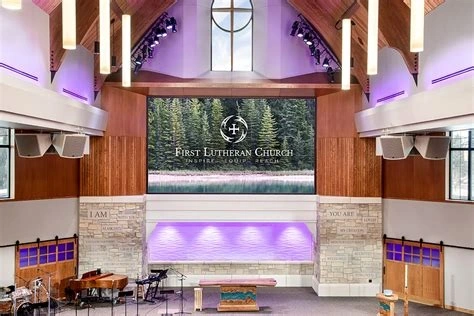
For American church administrators, the primary pain point is ambient light. Traditional projectors wash out during morning services.
● Strategy: We recommend the , which balances high-definition visuals with a mid-range led screen wall price.
● ROI Factor: Unlike projectors that require bulb replacements every 1,500 hours and constant recalibration, a Unishine LED wall lasts 100,000 hours. The “projector-to-LED” transition typically pays for itself in maintenance savings alone within 42 months, while significantly increasing congregational engagement.
2. Live Events & Rental: The Logistics of Profit
For rental and staging companies, the rental video wall cost is driven by labor and durability.
● Strategy: The U-RENT Fast-Lock System is designed for velocity. It features magnesium-alloy frames that are 30% lighter than standard cabinets.
● ROI Factor: If your crew can set up a 20sqm wall in 2 hours instead of 4, you reduce on-site labor costs by 50%. In a high-volume event market, this efficiency allows for more bookings per month and a faster recovery of your initial led wall price.
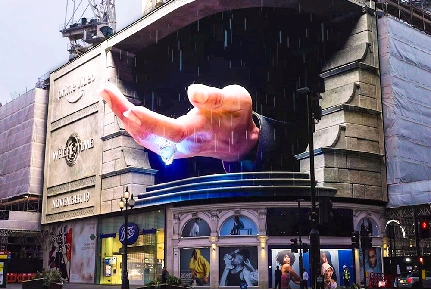
3. DOOH & Advertising: The 3D Premium
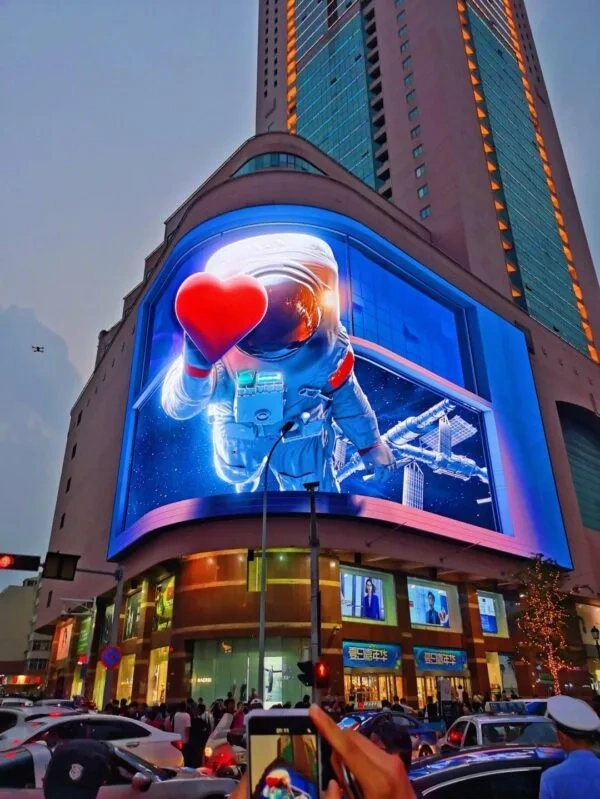
Digital Out-of-Home (DOOH) companies are moving toward immersive experiences.
● Strategy: The U-MAX Naked-Eye 3D Solution uses a high-brightness (8,000+ nits) outdoor architecture.
● ROI Factor: 3D billboards attract 5x more social media shares than 2D screens. This “viral” potential allows media owners to charge a 30-40% premium on ad slots, drastically shortening the payback period on the led wall display price.
Navigating International Procurement Risks
As a global buyer, sourcing from a involves more than just comparing invoices. To protect your capital, you must evaluate the “hidden” technical and logistical risks.
Navigating the global LED market requires a strategic lens; to ensure your investment is protected from technical and regulatory risks, we recommend auditing every potential partner against the following professional benchmarks.
Procurement Checklist for Global Wholesalers
- Compliance with CE, FCC, and RoHS 2.0 (To avoid port-side seizures).
- Proven DDP/CIF logistics experience to the United States and EU.
- Transparent BoM (Bill of Materials) with Tier-1 driving ICs.
Technical & Budget Consultation FAQ
Q: Why do two “identical” P2.0 quotes vary by 30%?
A: The difference is often in the “Gold-Wire” vs. “Copper-Wire” bonding. Gold-wire chips maintain 95% brightness after three years, whereas copper-wire chips may decay by 30%, creating a patchy and dim appearance that lowers the resale value of your asset.
Q: How do I calculate the 5-year operational energy cost?
A: Using a 50sqm outdoor wall as an example, switching from common-anode to common-cathode (GaN) drivers can save approximately $1,200 annually in electricity. Over five years, this effectively reduces your led screen wall price by $6,000.
Q: What is the cost-benefit of “Front Access” maintenance?
A: A front-maintenance design adds roughly 10% to the led wall panel price, but it eliminates the need for a 2-foot maintenance corridor behind the screen. In metropolitan areas, saving that square footage can pay for the entire screen over the course of a lease.
Q: What is 3D SPI, and why should a buyer care?
A: Solder Paste Inspection (SPI) ensures that every LED diode is perfectly connected. This prevents “latent defects”—pixels that work today but fail in six months due to heat expansion—thereby reducing warranty repair labor by 25%.
Q: How does Unishine provide cost analysis for OEM/ODM projects?
A: We provide a transparent Bill of Materials (BoM) and engineering drawings to our , allowing them to accurately project their own margins and market-specific led wall display price.
Seeking the Equilibrium of Performance and Price
The journey to find the optimal led wall cost should not be a race to the bottom. In the professional AV world, the “cheapest” quote is almost always the most expensive in the long run due to service calls, part failures, and lost revenue.
At Unishine LED, we believe that transparency is the foundation of a 20-year partnership. By choosing a manufacturer that invests in 3D SPI testing, GaN energy efficiency, and gold-wire reliability, you are not just buying a display; you are securing your visual legacy.
Whether you are an AV integrator designing a complex system or a wholesaler looking for a stable supply chain, our engineers are here to provide the technical depth required to make a confident decision.
Secure the Best Value for Your Visual Investment
Speak with a Unishine senior engineer to balance your technical requirements with a competitive video wall price.
Get an Instant Factory-Direct Quote