For many facility managers and procurement officers, the search for a high-performance visual solution often begins with a simple, albeit loaded, question: “What is the actual video wall price?” In an era where digital canvases are replacing everything from static billboards to sanctuary projectors, the initial sticker price is frequently just the surface of a much deeper financial landscape. Whether you are looking for a led video wall for sale to upgrade a Texas-based worship center or a system integrator pricing a mission-critical command hub, understanding the “transparency” of a quote is the primary hallmark of a high-quality supplier. At Unishine LED, we believe that a cost-effective display isn’t merely the one with the lowest initial bid; it is the system where every dollar spent minimizes long-term operational risk and maximizes visual impact.
1. 2026 LED Video Wall Market Overview: Price Trends and Transparency
As we approach 2026, the global LED market has reached a state of technical maturity that has significantly lowered the entry barrier for high-density displays. Currently, the video wall cost per square meter can vary drastically based on application and location. Entry-level outdoor displays for general signage may range from $800 to $1,500 per square meter, whereas premium, fine-pitch indoor systems—especially those utilizing COB (Chip on Board) technology—can range from $3,500 to over $8,000 per square meter depending on redundancy and driving architecture.
For a B2B buyer, “transparency” in line-item reporting is critical. A reputable global manufacturer focuses on a pricing philosophy that eliminates “middleman markups.” By operating from our own 10,000m² production base, Unishine provides factory-direct pricing that allows organizations to reallocate their saved budget into higher-quality components—such as gold-wire LEDs or high-refresh-rate ICs—that significantly prolong the system’s operational life.
2. Five Technical Variables Driving Your Video Wall Cost
To identify why two seemingly identical displays have a 50% price gap, we must look at the physical and electrical “DNA” of the cabinets. Understanding these variables allows you to decide where to invest and where to save.
| Technical Variable | Impact on Video Wall Price | Performance ROI & Long-term Value |
| Pixel Pitch (Resolution) | Exponential increase (P1.5 is ~2.5x the cost of P2.5) | Determines the minimum viewing distance; essential for close-range clarity in boardrooms. |
| Packaging (SMD vs. COB) | COB led display carries a 20-30% premium | Provides “hardened” protection (impact/dust/static); reduces pixel failure rates in high-traffic areas. |
| Refresh Rate & Driver IC | Premium 7680Hz drivers add 10-15% to cost | Crucial for professional broadcast and social media; eliminates “black lines” on smartphone cameras. |
| LED Chip & Wire Bond | Tier-1 Gold-wire vs. Economy Copper-wire | Affects color decay; gold-wire ensures consistent brightness over the 100,000-hour lifespan. |
| Energy Management | GaN (Gallium Nitride) Power Supplies | Higher initial cost but lowers monthly electricity bills by 20% and reduces heat output (saving HVAC costs). |
The pixel pitch cost is the most significant factor in any quote. A P1.5 wall contains nearly three times as many LED diodes as a P2.5 wall of the same size. If your audience consists of a congregation in a large church sitting 30 feet away, a P2.5 provides the “best” ROI. However, for a corporate boardroom where executives sit 5 feet from the screen, the investment in a fine-pitch (COB system https://www.unishineled.com/product/u-pad-cob/)is mandatory to avoid the “screen door effect.”
3. Beyond the Quote: 4 Hidden Costs You Must Budget For
One of the biggest anxieties in AV procurement is “budget creep.” To ensure your video wall cost remains predictable, you must account for these four often-overlooked expenses that often don’t appear in the hardware-only quote:
* Steel Structure and Physical Installation: A video wall is a significant mechanical installation. Whether it is a wall-mount or a floor-standing totem, the engineering of the support frame can add 5–10% to the total project cost. Unishine’s lightweight die-cast aluminum cabinets help mitigate this by reducing the overall structural load requirements.
* Video Processors and Control Systems: To display 4K or 8K content seamlessly, you need a high-performance video wall processor. Budgeting for redundant signal controllers is also recommended for mission-critical environments like command centers or live broadcast studios.
* Maintenance Architecture (Front vs. Rear Service): The led display installation price is heavily influenced by how you access the components. Front-serviceable (magnetic modules https://www.unishineled.com/products/led-display/) allow for flush mounting, which saves expensive real estate and reduces the labor hours required for a 5-minute module swap.
* Spare Parts and Turnaround: We always recommend a “5% Spare Buffer.” Having extra modules, receiving cards, and power supplies on-site ensures zero downtime. When sourcing from China, you must also factor in the potential for led display tariff cost and specialized “white glove” logistics to your facility.
4. The ROI of Factory-Direct Procurement: The Unishine Advantage
Why does sourcing from a china led manufacturer like Unishine provide a better ROI? It comes down to “manufacturing efficiency.” Our facility utilizes over 18 high-speed SMT lines and 3D SPI (Solder Paste Inspection) technology to automate quality control.
By automating these “quality valves,” we reduce the failure rate of individual pixels to nearly zero. Every hour saved in “on-site repair” is money back in your pocket. Furthermore, our 72-hour full-panel aging test ensures that early-component failure happens in our factory, not in your lobby. This “Extreme QC” is why Unishine is a preferred partner for wholesale video wall price seekers who cannot afford the high cost of repetitive maintenance or the risk of “dead pixels” during a grand opening.
5. ROI-Focused Selection for Specific Industry Needs
Turning “Cost” into an “Investment” requires choosing a configuration that matches your specific business goals. We recommend specific architectures for different target sectors:
* Houses of Worship(https://www.unishineled.com/solution/led-screen-for-church/): For the church led wall cost, the goal is replacing aging, dim projectors. Our C-shine series provides high brightness that ignores ambient light from stained glass, allowing for “lights-on” worship that increases engagement and improves social media broadcast quality.
* Rental & Staging(https://www.unishineled.com/solution/led-screen-for-stage/): For rental video wall roi, speed is the primary currency. The U-RENT series features quick-lock mechanisms and reinforced edges, allowing a 2-person crew to build a wall in half the time, drastically cutting labor expenses.
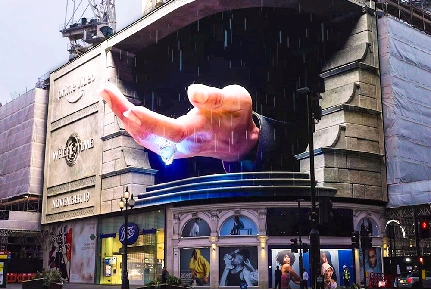
* DOOH Media(https://www.unishineled.com/solution/led-display-for-naked-3d/): The outdoor 3d billboard price is justified by the massive jump in ad-space value. Using Unishine’s naked-eye 3D technology (U-MAX), media companies often charge a 2x-3x premium for ad slots compared to traditional flat 2D displays because of the viral “shareability” of the content.
6. Expert Advice: 5 “Red Flags” in Video Wall Quotes
If a quote for a best video wall looks too good to be true, it likely is. Professional buyers should watch for these red flags to avoid buying a “lemon”:
1. Vague LED Branding: If the quote says “High-quality LEDs” but doesn’t specify a brand (e.g., Nationstar), they may be using low-bin copper-wire diodes that will dim within 12 months.
2. Missing Certifications: If the manufacturer cannot provide valid CE, FCC, or RoHS documents, you risk having the shipment seized at customs—a cost that will fall entirely on you.
3. Low Refresh Rates: A quote with 1920Hz might be cheaper, but it will result in visual “flicker” on phone cameras, making your venue look poor on social media.
4. No Front-Service Design: This can double your long-term video wall maintenance cost if the wall must be dismantled from the back for a single module repair.
5. Weak Warranty Terms: A “return to factory” warranty is logistically impossible for US-based clients. Look for providers that offer comprehensive spare part packages and remote technical support.
7. Common Questions Regarding Video Wall Procurement (FAQ)
Q: Why do two P2.0 walls from different factories have a 100% price difference?
A: It usually comes down to the driver IC and the gold-wire vs. copper-wire packaging. Low-cost chips struggle with grayscale at low brightness, making the image look “patchy” or “ghosted.”
Q: What is the annual video wall energy consumption?
A: A typical 10sqm indoor wall consumes about 2.5kW/h on average. Using Unishine’s high-efficiency GaN power supplies can save an estimated $400–$600 per year in electricity costs depending on local utility rates.
Q: Is there a custom video wall price premium for OEM/ODM?
A: As a direct china led manufacturer, we offer (flexible customization https://www.unishineled.com/quality-control/) (branding, specific cabinet dimensions) at highly competitive rates because we control the entire SMT and assembly process in-house.
Q: What is 3D SPI detection, and how does it save me money?
A: 3D Solder Paste Inspection identifies poor electrical connections during production. By catching these early, we prevent “dead pixels” from appearing months after installation, saving you thousands in technician call-out fees.
Q: How do I get a real-time wholesale video wall price list?
A: Because raw material costs (like driver ICs) fluctuate, we provide project-specific quotes. You can click “Inquire Now” to get a tiered quote based on your project volume and technical requirements.
8. Conclusion: Finding the Golden Balance
Ultimately, the best video wall is the one that balances immediate capital expenditure with long-term reliability. A cheap display that requires constant repair is far more expensive over five years than a premium system with a robust warranty and high-efficiency components. Unishine LED is committed to helping global integrators and facility managers navigate these complexities with honest, technical, and data-driven pricing.
Take the next step: Don’t guess your budget. (Contact the Unishine engineering https://www.unishineled.com/contact-us/) team today to receive an instant quote and a detailed ROI analysis for your specific display requirements.