As one of the core components of an LED display, the LED receiving Card plays a vital role. This article will take you through everything you need to know about LED display receiving cards. Let’s dive in.
1.What is an LED receiving Card?
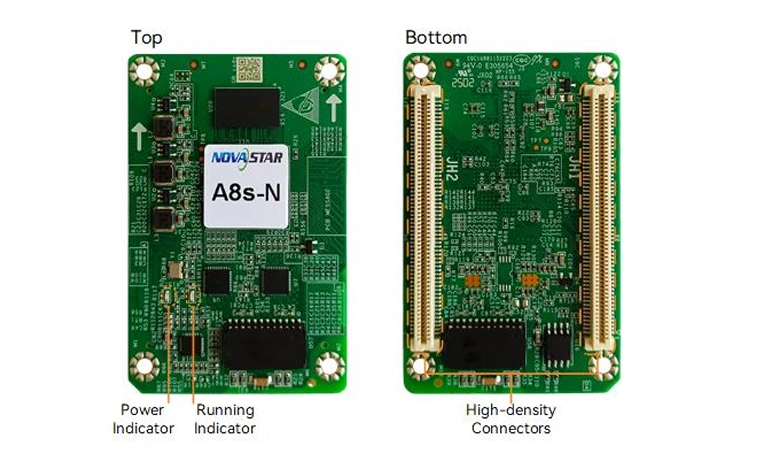
The LED display receiving card is a key part of the LED display control system. Its main function is to receive image data from the transmission card and convert this data—according to specific protocols and formats—into signals that the LED screen can recognize, thereby driving the display to show the corresponding image. Simply put, it acts like an interpreter, helping computers or other devices translate the information they want to display into a language the LED screen understands.
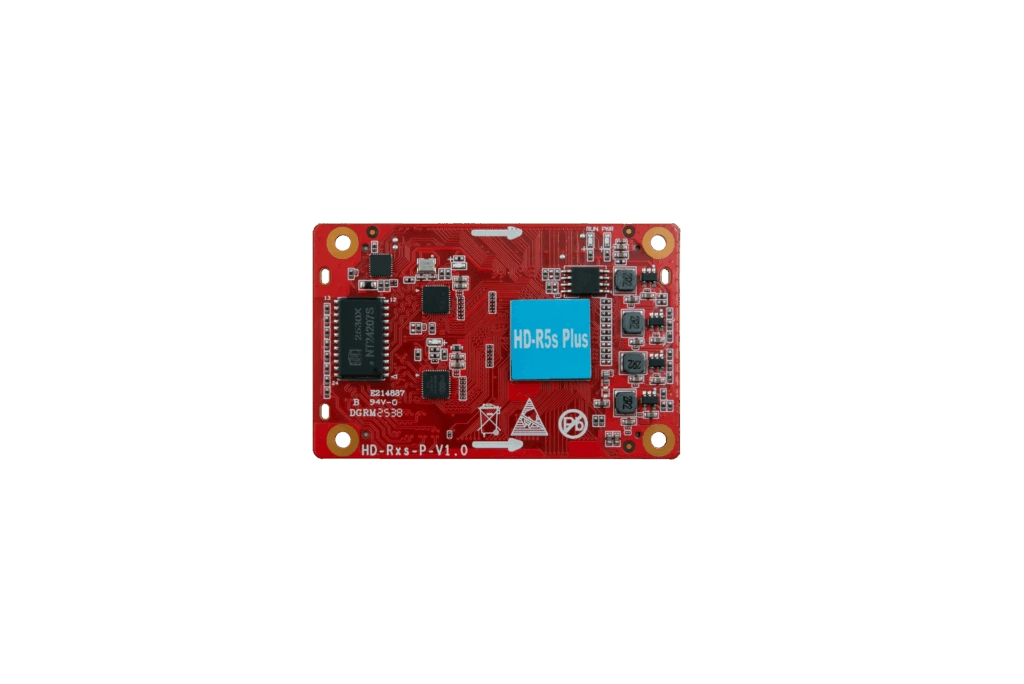
A receiving card consists of several components, including:
Microcontroller Unit (MCU) – responsible for data processing and overall system control.
Memory – used to store LED display content and control parameters.
Interface Chip – handles data transmission and communication with the control card.
In addition to basic data receiving and conversion, modern LED receiving cards often include features such as grayscale control, color correction, and brightness adjustment. These functions enable the card to deliver clear, smooth, and vibrant display effects. receiving cards can also support network communication and wireless transmission, allowing for remote control and enhancing the flexibility and convenience of the LED display system.
2. How an LED receiving Card Works
The working principle of an LED receiving card can be summarized in the following steps:
Data receiving
The receiving card receives image data sent by the transmission (control) card via a network interface or other communication method. This data is usually transmitted in a specific protocol and format.
Data Analysis
After receiving the data, the card analyzes and processes it. This involves packet segmentation, identification, and control to extract image data and relevant control parameters.
Data Conversion
The parsed image data is converted into a format suitable for the LED display. Based on parameters such as screen resolution and color depth, the receiving card transforms the data into pixel data recognizable by the LED modules.
Grayscale Control & Color Correction
The card applies grayscale control and color correction to the pixel data to ensure image clarity and color accuracy. This includes adjusting the brightness and color of each pixel for high-quality display output.
Data Transmission
The processed pixel data is sent through the output interface of the receiving card to the LED lamps on the screen. This step often involves differential signal conversion and constant-current driving to ensure stable and reliable signal transmission.
Synchronized Display
The receiving card synchronizes with the transmission card to ensure that pixel data is updated simultaneously across the entire LED display. This allows viewers to see a clear and smooth image.
In summary, the LED receiving card acts as the brain of the LED display—receiving and processing information so that the screen can operate normally and display content clearly.
3. Technical Features of LED receiving Cards
The technical characteristics of LED receiving cards are mainly reflected in the following aspects:
Real-Time Performance
receiving cards can receive and process data from the transmission card in real time, ensuring the LED display shows dynamic images and text instantly—much like watching a live TV broadcast. It acts as a “real-time interpreter,” instantly translating data into a language the display understands.
Rich Expressiveness
receiving cards support high-resolution and high-color-depth image display, enabling detailed and vivid visual effects. Think of it as an advanced color printer capable of producing finely detailed, richly colored pictures.
Complex Operation
Although the working principle is relatively straightforward, practical application often requires configuration and debugging based on the specific LED display model, size, and control requirements. This process can be relatively complex—similar to adjusting advanced camera settings, where knowledge of professional terms and operational techniques is needed.
Higher Price
Due to the need for high-performance processors, large memory capacity, and stable communication interfaces, the manufacturing cost of receiving cards is relatively high, leading to a higher market price.
High Reliability Requirements
As a core component of the LED display control system, the stability and reliability of the receiving card are crucial. It must operate consistently and stably—just like a household television that shouldn’t frequently malfunction or show blurry images. Therefore, receiving cards are designed with excellent heat dissipation, anti-interference capabilities, and fault self-recovery functions.
Good Flexibility
Modern receiving cards typically support a variety of communication protocols and control methods, such as serial port, network port, and wireless transmission. Like a multifunctional computer, they can connect to different devices and software, adapting to various application scenarios and needs.
4.How to Install an LED Display receiving Card
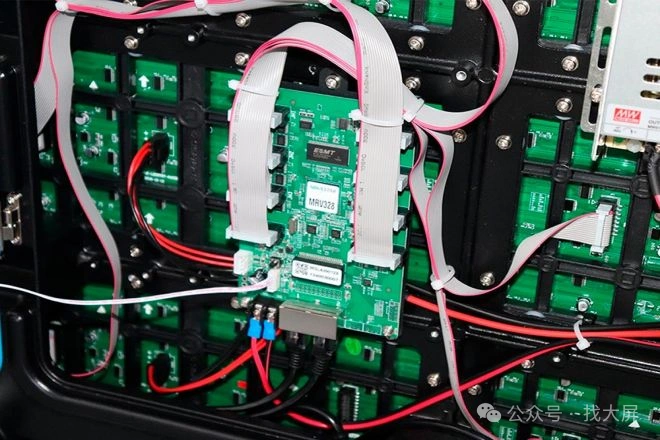
Installation Steps:
(1)Preparation: Ensure all necessary hardware and tools are available, including the receiving card, screwdriver, cables, etc.
(2)Determine the Location: Choose a suitable location inside the LED display frame to install the receiving card. It is usually mounted inside the upper or lower border for easy connection and cabling.
(3)Secure the receiving Card: Use screws or other fasteners to firmly fix the receiving card in the chosen location, ensuring it is stable and won’t loosen.
(4)Connect the Power: Connect the receiving card’s power cable to a suitable power outlet or switching power supply to ensure stable power delivery.
(5)Connect Data Cables: Based on the display and control system requirements, use appropriate data cables (e.g., Ethernet cables) to connect the receiving card to the transmission (control) card.
(6)Check Connections: After completing all connections, carefully inspect all cables and connections to ensure they are secure and free from looseness or damage.
(7)Testing: Before powering on, double-check that all connections are correct. Then switch on the power and test the system. Observe whether the display can normally receive and show data.
Installation Position:
The receiving card is typically installed inside the LED display frame. The exact position depends on the display model, size, and control system requirements. Generally, it is placed inside the right-side or lower border to facilitate wiring and connection.
During installation, ensure the card is positioned stably and securely for easy future maintenance and upgrades.Note: If you are installing the receiving card yourself, please carefully read the product manual or installation guide beforehand to ensure you follow the correct steps and positioning.
5.How to Choose an LED Display receiving Card?
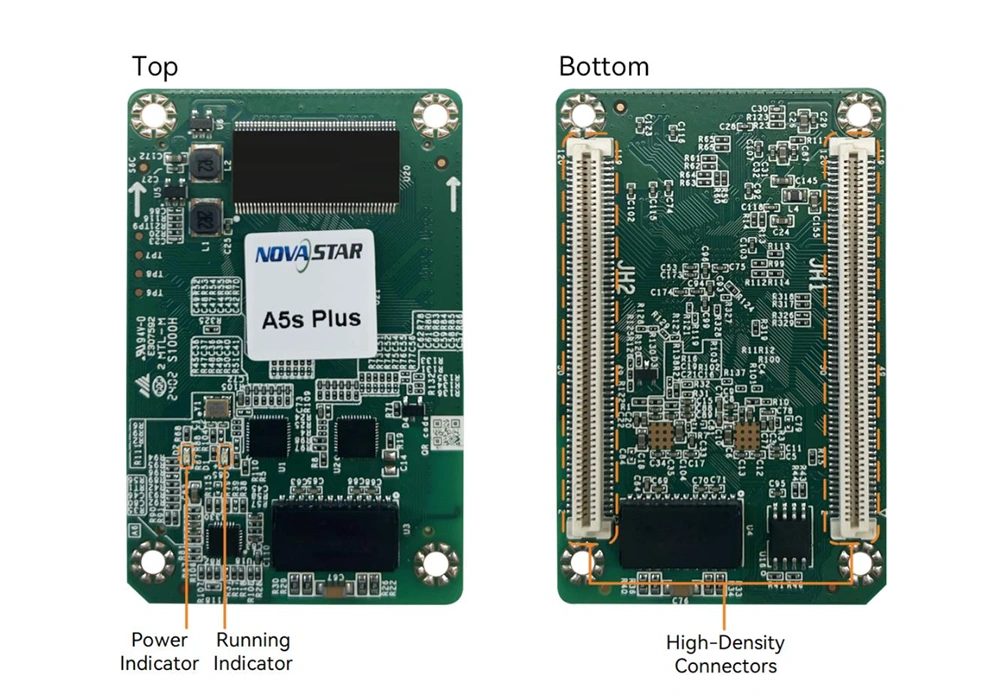
When selecting an LED display receiving card, consider the following key factors:
Compatibility
Ensure the receiving card is compatible with your LED display model, size, and control system. Different displays may require different types of receiving cards, so verify they are a match.
Performance Requirements
Choose a receiving card with sufficient processing power and stability based on your application needs. Consider factors such as real-time performance, data processing capability, grayscale control precision, and color correction to ensure high-quality image and text display.
Interface & Communication Methods
Select a receiving card with suitable interfaces and communication methods according to your control system requirements. For example, if your system uses network communication, choose a card that supports a network interface.
Scalability & Upgradability
Consider the card’s scalability and upgradability so it can continue to be used when the LED display is expanded or upgraded in the future. Opt for cards that support more LEDs, higher resolution, or additional features to meet future demands.
Price & Cost-Effectiveness
Balance price and performance when choosing a receiving card. Don’t simply opt for the lowest price if it compromises quality and performance. Select a card that offers good value—meeting your needs without straining your budget.
Brand & Quality
Choose receiving cards from well-known brands and reputable manufacturers to ensure product quality and after-sales service. Research the manufacturer’s reputation, quality control, and customer reviews to make an informed decision.
Technical Support & After-Sales Service
Prefer manufacturers that provide technical support and after-sales service. This way, if you encounter issues or need assistance during use, you can get timely help and solutions.
If you’re unsure how to choose, feel free to consult the Unilumin LED Team.